
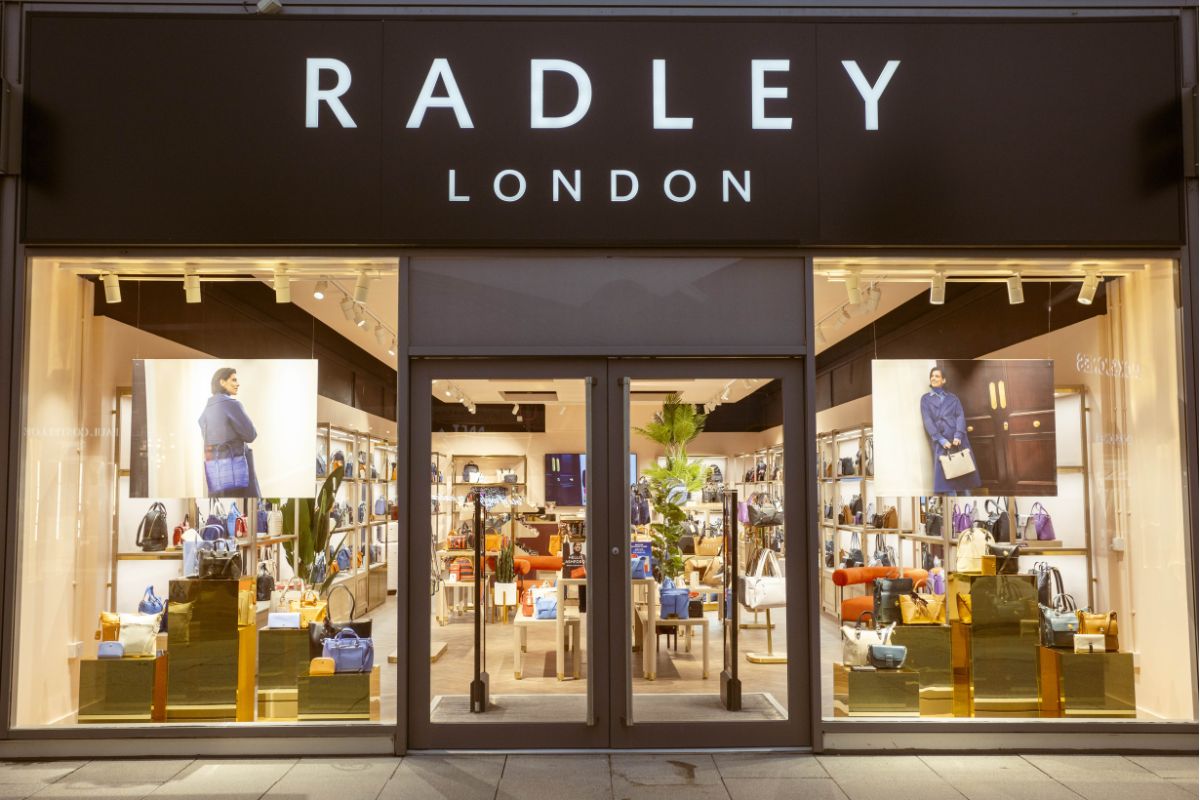
Gordon Brothers has appointed Lloyd Baker Leather Ltd to develop, source, market and distribute Radley handbags and small leather goods across the United Kingdom, Europe, the United States and Australia. Coming less than five months after Gordon Brothers acquired the brand and related intellectual property out of administration, the agreement shows how an owner can rebuild a consumer brand around licensing and wholesale capabilities rather than recreate the previous operating structure.
The agreement covers more than distribution
Gordon Brothers announced the partnership on 8 October 2026. Lloyd Baker Leather will be responsible for four connected functions: product development, sourcing, marketing and distribution. Its remit covers Radley’s core handbags and small leather goods across four regions.
That combination is commercially significant. A distributor may simply take finished inventory into a market. Here, the disclosed remit reaches upstream into product and sourcing and downstream into marketing and channel delivery. The partner therefore sits across more of the value chain, although the announcement does not disclose the exact division of decision rights between brand owner and licensee.
No contract length, royalty structure, minimum guarantee, sales target, exclusivity provision, launch calendar or retailer list was disclosed. Those terms should not be assumed.
From intellectual-property acquisition to operating model
Gordon Brothers announced on 26 May 2026 that it had acquired the Radley brand and related intellectual property. At the time, it said it would pursue an asset-light model, strengthen retailer relationships, expand internationally and extend the brand into additional categories.
The Lloyd Baker appointment converts part of that strategy into an operating arrangement. Gordon Brothers remains the announced brand owner, while the licensee takes responsibility for executing key product and market functions in the named category and territories.
This separation can reduce the need for a brand owner to rebuild every capability internally after an insolvency process. It can also concentrate execution risk in a smaller number of partners. Whether that trade-off creates value depends on governance, quality control, working-capital support, retailer confidence and the economics of the licence—details that are not public.
Territory design reveals the immediate priorities
The new remit covers the UK, Europe, the US and Australia. These are distinct retail and regulatory environments, so a single multi-region appointment can support consistency in product architecture, sourcing and brand presentation. It may also reduce coordination costs compared with appointing separate category operators in each market.
However, a broad territory does not eliminate local execution needs. Wholesale calendars, consumer preferences, labelling rules, product compliance, import economics, ecommerce operations and department-store relationships still differ by market.
Gordon Brothers’ May announcement also identified Asia as a target for Radley’s wider footprint, but Asia is not included in the territories named in the October agreement. That is an observable difference in scope, not evidence that Asian expansion has been abandoned or that rights there are available.
Retail continuity is an operating test, not a statement
Gordon Brothers says the partnership is intended to provide continuity for retailers and consumers. The practical test will be whether product flow, seasonal line planning and account service remain dependable through the transition.
Retailers and distributors should examine:
- Order-book continuity: which entity accepts, fulfils and stands behind existing and future purchase orders.
- Inventory ownership: who finances stock, holds title and bears markdown or obsolescence risk.
- Quality governance: the approval gates for design, materials, factories, testing and final product.
- Marketing assets: how campaign production, local adaptation and retailer content are approved and funded.
- Returns and warranties: which party handles consumer obligations and legacy product issues.
- Channel policy: how wholesale, ecommerce, marketplaces and outlet distribution will be coordinated.
The announcement does not say that existing retailer agreements have transferred or changed. Contractual position should be confirmed directly rather than inferred from the licensing appointment.
What brand owners can learn from the structure
For owners acquiring intellectual property from a distressed business, the central decision is what to rebuild, what to outsource and what to discontinue. A licence that combines product creation and route-to-market responsibilities can accelerate relaunch, but it also raises the cost of choosing the wrong partner.
Partner qualification should therefore extend beyond sales reach. Relevant diligence includes:
- category-specific design and merchandising capability;
- sourcing resilience, audit processes and product-compliance systems;
- working capital for samples, production and retailer payment cycles;
- account coverage in every named territory;
- brand-protection controls and approval workflows;
- data-sharing, forecasting and inventory visibility;
- remedies if minimum performance or quality standards are missed.
Companies House records show that Lloyd Baker Leather Ltd is an active UK company incorporated in 2011 and classified as an agent in textiles, clothing, footwear and leather goods. Its own website says the Lloyd Baker brand traces its origins to 1991. These records establish corporate continuity and category experience, but they do not by themselves prove the capacity, economics or performance of the Radley programme.
Additional category expansion needs a separate test
Gordon Brothers says it is evaluating opportunities in additional categories. That creates a potential licensing pipeline, but no further categories, partners or available rights were announced.
Future extensions should be judged on consumer permission, channel fit and operational adjacency. A recognisable brand can travel into new categories, but weak extensions can dilute positioning or create inconsistent quality. The appropriate sequence is to stabilise the core proposition, establish governance and retailer confidence, then test extensions against evidence rather than licence the name as widely as possible.
The commercial lesson
Radley’s new agreement is a useful example of post-acquisition brand reconstruction. The intellectual property changed hands in May; by October, a specialist partner had been assigned a multi-function, multi-region remit for the core product category. The sequence shows that buying a brand is only the first transaction. The operating model that follows determines whether the brand can return to dependable product flow and retailer relevance.
For investors, licensors and prospective partners, the most important questions remain undisclosed: economics, governance, performance thresholds, working-capital responsibilities and channel commitments. Those are the provisions that will determine how risk and reward are actually shared.
Star Brands Consulting Group supports brand owners, investors and operating partners assessing licensing structures, cross-border route-to-market models and partner readiness. Learn more about our Market Entry Advisory.
Leave a Reply