
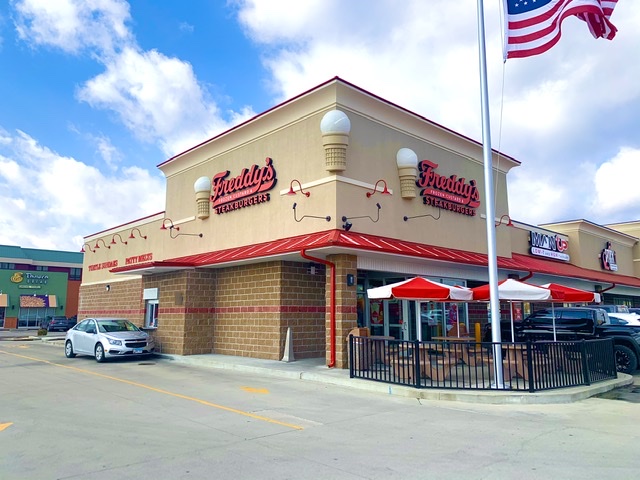

Freddy’s Frozen Custard & Steakburgers has signed a five-unit development agreement with OMG Holdings OPC for the Philippines, marking the US restaurant brand’s first development deal in Southeast Asia. The first restaurant is anticipated in 2027. The commercial test is not simply whether the brand can attract attention; it is whether a local operator can translate the concept into repeatable unit economics.
The agreement at a glance
Freddy’s announced the agreement on 5 October 2026. It covers five restaurants in the Philippines, with OMG Holdings OPC leading development and the first opening anticipated in 2027.
The release describes the transaction as a five-unit development agreement. It does not identify individual sites, disclose investment requirements, fees, royalties, sales forecasts or payback expectations, or state that OMG holds wider Southeast Asian rights. Those distinctions matter: a development commitment is evidence of planned market entry, not proof that stores have opened or that performance has been established.
Why five units is a deliberate market-entry scale
A five-unit programme is large enough to test more than a flagship restaurant but still contained enough for the parties to adjust. One opening can show whether customers respond to the proposition. Several units can show whether site selection, labour productivity, food quality, supply reliability and demand hold across different trade areas.
For the franchisor, the sequence creates a controlled learning loop before any wider regional commitment. For the developer, it spreads central capabilities—management, training, procurement and marketing—across multiple restaurants. The risk is that overhead can arrive before the store base is large enough to absorb it. Phasing therefore matters as much as the headline unit count.
A large foodservice market is not automatically an easy one
The Philippines offers meaningful demand, but it is also highly competitive. The Philippine Statistics Authority’s 2024 business survey, released in June 2026, counted 37,500 formal accommodation and food-service establishments. Restaurants and mobile food-service activities represented 27,638 establishments, or 73.7% of the total.
The same survey recorded ₱641.76 billion in revenue and ₱568.93 billion in expense for restaurants and mobile food services. That implies a revenue-to-expense ratio of roughly 1.13—an analytical reminder that a busy category can still leave limited room for execution errors. The survey also recorded ₱10.33 billion in e-commerce sales for the restaurant and mobile food-service segment, reinforcing the need to model delivery economics separately from dine-in traffic.
A 2025 USDA Foreign Agricultural Service report projected Philippine foodservice sales returning to about US$14 billion in 2025, with further growth in 2026. It also highlighted a young population, continued chain expansion and consumer affinity for American brands. Those are supportive conditions, not a substitute for operator-level diligence.
What the operating partner must prove
Freddy’s said local market understanding and experience scaling global brands were important in selecting OMG Holdings. The announcement, however, provides little public detail about the operator’s portfolio, capital plan or proposed sites. Investors and counterparties should treat those areas as diligence questions rather than fill the gaps with assumptions.
- Site discipline: Which trade areas can support the required ticket size, peak throughput, parking or access, and delivery radius?
- Supply-chain readiness: Can approved beef, dairy, buns, packaging and other inputs be sourced consistently without undermining quality or margins?
- Cold-chain and equipment uptime: Frozen-custard operations add temperature-control, maintenance and service requirements that must work at local scale.
- Training and quality assurance: The first management team must be able to open one restaurant and then reproduce standards across four more.
- Localisation boundaries: Pricing, portions, promotions and selected menu choices may need adaptation, but the brand’s core proposition must remain recognisable.
- Channel economics: Delivery can broaden reach while commissions, packaging and fulfilment complexity reduce contribution margins.
Commercial implications for brand owners and operators
The deal illustrates why operator qualification should go beyond the ability to fund an opening. A capable market-entry partner needs a development organisation, local real-estate access, supply-chain judgement, disciplined reporting and enough liquidity to absorb delays or early underperformance.
It also shows the value of separating territorial ambition from earned expansion. A staged agreement can establish milestones for site approval, opening pace, training, quality and performance before further rights are considered. That protects brand standards while giving the local operator a clearer basis for investment decisions.
For investors, the useful indicators will come after the announcement: signed leases, the first store’s opening, customer repeat rates, food and labour costs, delivery mix, restaurant-level cash flow and whether later units open on schedule. Until those signals exist, the agreement should be read as a credible entry plan rather than a proven market outcome.
A practical diligence checklist
- Confirm the exact territory, exclusivity conditions and development milestones.
- Build unit economics for dine-in, takeaway and delivery rather than one blended model.
- Stress-test imported and locally sourced inputs against currency and logistics changes.
- Define which menu, pricing and marketing decisions require franchisor approval.
- Verify the operator’s management bench, capital plan and multi-site opening capacity.
- Set performance gates before accelerating beyond the initial five restaurants.
The real test begins with the first opening
Freddy’s Philippines agreement gives the brand a measured route into Southeast Asia and gives OMG Holdings a defined multi-unit platform. Its significance will ultimately depend on execution: a supply chain that protects the product, sites that fit local demand, disciplined opening cadence and economics that can support all five restaurants.
Star Brands Consulting Group supports brand owners and qualified operators evaluating entry structures, partner requirements and territory readiness. Learn more about our Market Entry Advisory.
Leave a Reply