
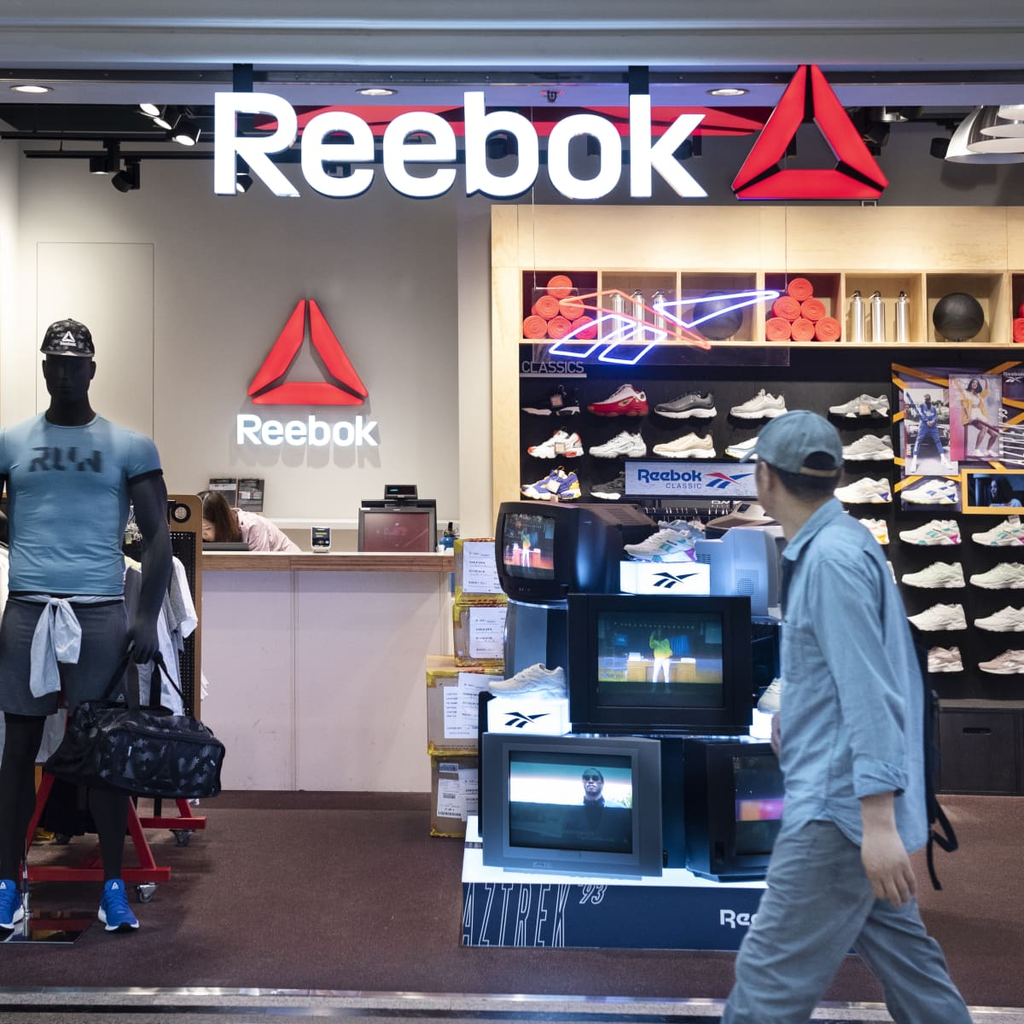
Authentic Brands Group and Dilly Sports have agreed a licence for Reebok children’s footwear in Brazil, assigning product development, manufacturing and distribution to a local footwear operator. The commercial significance is the scope of the operating role: this agreement combines brand rights with industrial capacity and access to retail channels.
What the Brazil agreement covers
The company announcement dated 6 October 2026, published by Licensing International on 7 October, says Dilly Sports will design, manufacture and distribute Reebok-branded children’s athletic, lifestyle and sport-inspired footwear across Brazil. Products are expected to include sneakers, sandals and football and basketball shoes.
The first collection is expected before Brazil’s Children’s Day on 12 October 2026. That is the announced launch target, not confirmation that every product or retail account is already trading.
Dilly Sports reports three Brazilian manufacturing facilities and a research-and-development centre in Novo Hamburgo, Rio Grande do Sul. The release identifies local manufacturing expertise and established retail and e-commerce relationships as strengths supporting the agreement. It does not disclose royalty rates, minimum guarantees, investment commitments, exclusivity terms or the licence duration.
One brand can have several specialist partners
This is not Reebok’s first category-specific licensing agreement in Brazil. In a separate announcement on 21 November 2025, Authentic appointed RobSol to design, manufacture and distribute Reebok eyewear. That programme covered sunglasses, optical frames, accessories and swim goggles, with an initial 22 styles planned for launch from 24 November 2025.
The two agreements demonstrate why investors need to examine the precise rights being offered. A children’s-footwear licence and an eyewear licence can sit within the same national brand strategy while requiring different factories, product approvals and sales networks. Neither announcement establishes that general Reebok store rights or another product category are available to a new applicant.
The operating capability behind a licensing proposal
Star Brands analysis: the Dilly agreement illustrates a route to brand expansion that depends on the partner’s ability to turn intellectual property into approved products and reliable retail supply. For an established manufacturer, the investment case should be built around production capability, distribution coverage and working capital—not brand recognition alone.
- Define the rights precisely. A proposal should specify product categories, age ranges, territory, channels and approval responsibilities. Ambiguous scope creates uncertainty over what the operator can manufacture or sell.
- Match manufacturing to the launch calendar. Design approval, tooling, material procurement, production and delivery need a coordinated timetable. A seasonal sales target leaves little value in inventory that arrives after the relevant buying period.
- Separate distribution reach from committed orders. A list of retail relationships is useful evidence of access. Purchase commitments, replenishment terms and account-level demand forecasts provide stronger evidence for funding production.
- Model cash before projecting returns. Product development, stock, marketing, customer payment terms and any contractual guarantees can require capital before receipts arrive. The public announcement provides no basis for calculating this agreement’s return on investment.
What brand owners and investors should take from the deal
For brand owners, specialist licensing can add a category without building every manufacturing and distribution function internally. The practical challenge is keeping design standards, quality controls and channel positioning consistent across partners.
For operators, the strongest submission is specific: the products they can develop, the accounts they can serve, the capacity they can commit and the capital they can support. The Reebok–Dilly announcement provides a concrete example of those capabilities being central to a licensing relationship.
For investors assessing a brand licence or international retail partnership, Star Brands Consulting Group’s advisory services can support market assessment, operator readiness and the preparation of a commercially grounded proposal.
Leave a Reply