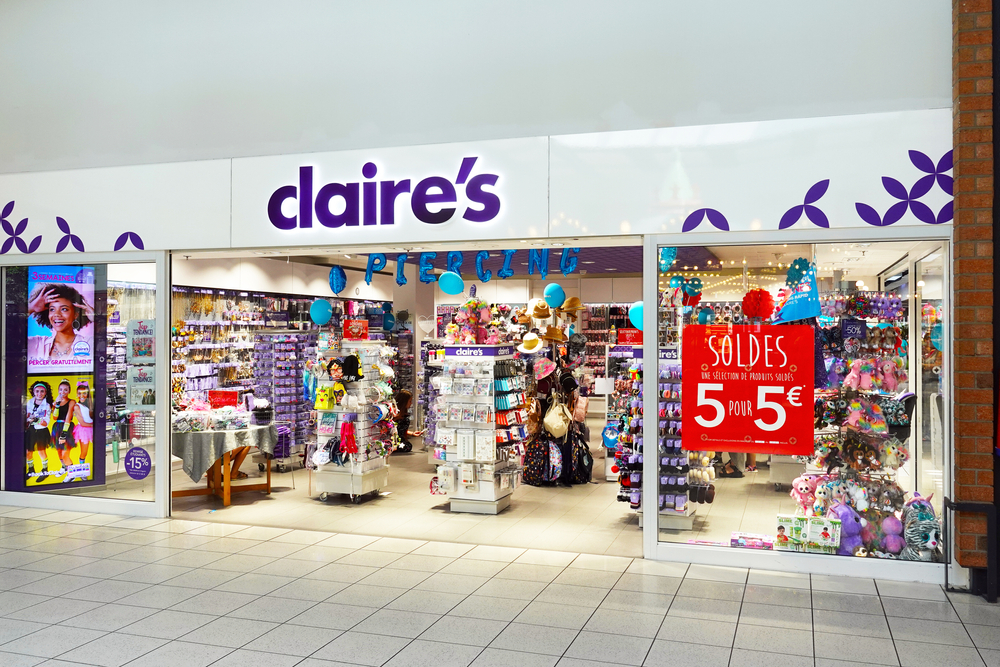
Claire’s Is Proving That Brand Expansion Doesn’t Always Mean More Stores
For decades, retail growth was measured using a simple metric:
How many stores did the company open this year?
More stores meant more visibility, more customers, and more revenue. Expansion was largely a real estate strategy.
That model is changing.
The latest developments surrounding Claire’s offer an important lesson for investors, founders, franchisors, and brand owners looking to understand how modern brands scale.
While headlines have focused on store closures, restructuring efforts, and operational challenges in certain markets, a much bigger strategic shift is taking place behind the scenes.
Claire’s is proving that brand expansion is no longer defined solely by store count.
It is increasingly defined by access.
A Brand in Transition
Claire’s remains one of the world’s most recognized youth-focused retail brands.
The company operates thousands of locations globally and has built decades of brand recognition through fashion accessories, beauty products, and ear-piercing services.
Recent years have not been without challenges.
Like many traditional retailers, Claire’s has faced:
- Shifting consumer behavior
- Reduced shopping mall traffic
- Increased digital competition
- Financial restructuring pressures
- Store rationalization in certain markets
Many observers see these developments and assume the brand is contracting.
That interpretation misses what is actually happening.
The Real Story Isn’t Store Closures
The more important development is Claire’s recent licensing partnership with Centric Brands.
The agreement is expected to place Claire’s products into more than 7,000 additional retail locations across North America through major retail partners.
Think about that for a moment.
A company can increase its customer reach by thousands of locations without opening a single Claire’s store.
That changes the economics of expansion entirely.
No new leases.
No major store development costs.
No large-scale retail buildout.
Yet the brand gains significant additional consumer exposure.
This is where many founders, investors, and operators need to rethink how growth actually works.
Expansion Is No Longer One-Dimensional
Historically, businesses often had a single growth model.
Retailers opened stores.
Restaurant brands franchised locations.
Manufacturers sold through distributors.
Today, the strongest brands combine multiple expansion channels simultaneously.
Company-Owned Expansion
Examples include:
- Apple
- Tesla
- Luxury retail brands
Advantages:
- Maximum control
- Premium customer experience
- Strong brand consistency
Challenges:
- High capital requirements
- Slower expansion speed
Franchising
Examples include:
- KFC
- McDonald’s
- Subway
Advantages:
- Faster growth
- Shared investment burden
- Local operator expertise
Challenges:
- Reduced operational control
- Franchise management complexity
Licensing
Examples include:
- Claire’s
- Disney consumer products
- Numerous celebrity and lifestyle brands
Advantages:
- Rapid market penetration
- Lower capital requirements
- Expanded product categories
Challenges:
- Brand control considerations
- Dependence on partners
Joint Ventures
Examples include:
- Starbucks and Tata in India
- Numerous international retail partnerships
Advantages:
- Local market expertise
- Shared risk
- Faster market entry
Challenges:
- Shared decision-making
- Partnership management
Distribution and Strategic Partnerships
Examples can be found across consumer goods, retail, beauty, food, and lifestyle sectors.
Advantages:
- Broad market access
- Efficient scaling
- Lower infrastructure investment
Challenges:
- Less direct customer control
The point is simple.
Growth is no longer about choosing one model.
It is about combining the right models.
What Investors Should Learn From Claire’s
Investors often focus on visible expansion.
Store openings.
New markets.
New locations.
However, some of the most valuable growth today happens through channels that receive far less attention.
Claire’s illustrates several important realities:
Store Count Is Not the Same as Brand Reach
A brand with 1,000 stores and 10,000 points of distribution may be stronger than a brand with 3,000 stores and limited distribution.
Licensing Can Scale Faster Than Retail
Retail expansion can take years.
Licensing agreements can expand reach almost immediately.
Capital Efficiency Matters
Opening hundreds of stores requires significant investment.
Licensing often achieves market penetration with substantially lower capital commitments.
Strong Brands Create Multiple Revenue Streams
The strongest brands do not rely on a single channel.
They build ecosystems.
What Brand Owners Should Learn
For founders and growth-stage companies, the Claire’s story raises an important question:
Are you building a business?
Or are you building a brand platform?
Many entrepreneurs assume expansion means:
- Opening more locations
- Hiring more staff
- Leasing more space
Sometimes that is the correct strategy.
Sometimes it is not.
The more important questions may be:
- Can your products be licensed?
- Can your intellectual property generate revenue beyond your core business?
- Can your brand enter additional channels without opening locations?
- Can strategic partnerships accelerate growth more efficiently than direct expansion?
The answers often determine how quickly a company can scale.
The Strategic Shift We Are Seeing Across Global Brands
This is not unique to Claire’s.
We see similar patterns across multiple sectors.
- Starbucks combines company-owned stores, licensing, and joint ventures.
- IKEA combines company-operated expansion with franchise structures.
- Global beauty brands combine retail, licensing, distribution, and e-commerce.
- Lifestyle brands increasingly combine stores, collaborations, licensing, and partnerships.
The underlying principle remains consistent:
The objective is no longer simply opening locations.
The objective is increasing access to the brand.
The Star Brands Perspective
At Star Brands Consulting Group, one of the most common misconceptions we encounter is the belief that expansion and growth are the same thing.
They are not.
A company can grow revenue without opening locations.
A brand can expand globally without operating stores.
A licensing strategy can sometimes outperform a traditional expansion strategy.
A distribution partnership can create more market penetration than years of direct development.
This is why modern expansion planning increasingly involves a combination of:
- Franchising
- Licensing
- Distribution
- Joint ventures
- Strategic partnerships
- Market entry structures
The most successful companies rarely rely on only one.
Final Thoughts
The most important lesson from Claire’s is not that it is expanding.
It is how it is expanding.
A generation ago, growth meant opening more stores.
Today, growth means increasing access to the brand.
The companies that understand this shift will often scale faster, enter more markets, deploy less capital, and create more long-term value than businesses still relying on a single expansion model.
Claire’s may have started as a mall retailer.
What it is becoming is something much more powerful:
A multi-channel brand platform.
And that may ultimately be the most important expansion story of all.
Leave a Reply