
Hasbro’s latest licensing update spans publishing, food and beverage, consumer products and visitor experiences. For prospective partners, the commercial question is which rights, operating capabilities and routes to customers can support a viable business around a familiar brand.
What Hasbro announced
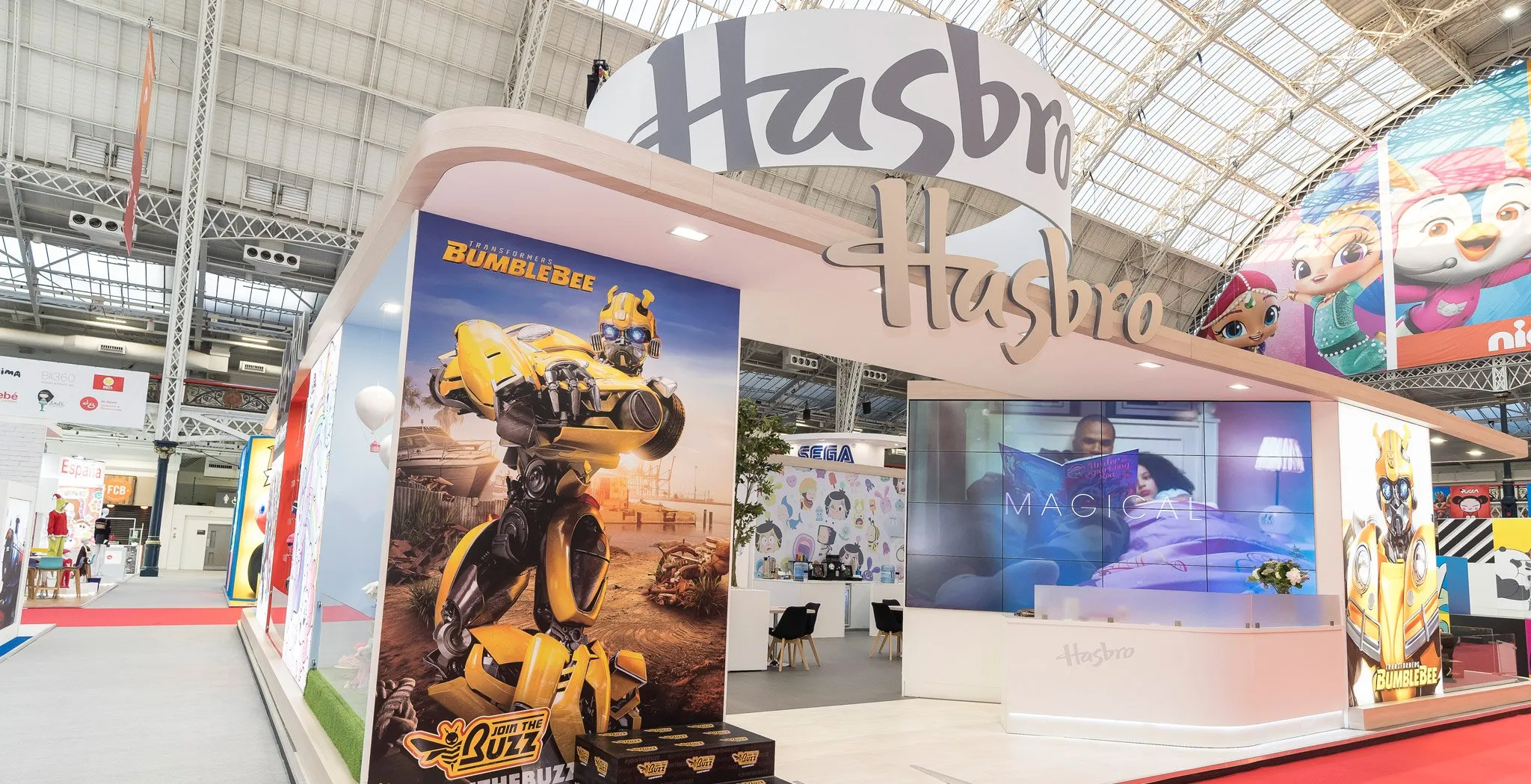
On 6 October 2026, Hasbro presented its licensing strategy at Brand Licensing Europe. The event runs 6–8 October at Excel London, according to the organiser. Hasbro’s use of “franchise” here describes entertainment and game properties; the announcement does not establish a business-format franchise offering.
Hasbro’s official announcement identifies a new Little Bee Books publishing agreement for Clue and Ouija, beverage collaborations with The Potions Group involving Transformers and My Little Pony, and Hasbro Games-themed popcorn kits from Poppowls. It also describes a continued My Little Pony agreement with Sanrio covering co-branded Hello Kitty products in China and the United States.
The update includes a third Peppa Pig Play Café in China and SEVEN’s upcoming Transformers and Play-Doh destinations in Saudi Arabia. These examples are at different stages: a continuing agreement, a new collaboration and an upcoming attraction should not be treated as equivalent evidence of completed rollout.
Commercial analysis: the licence needs an operating model
The following is Star Brands Consulting Group’s analysis, rather than a statement of the partners’ undisclosed contract terms.
A recognised property can help a product attract attention. It cannot, by itself, establish retail demand, secure shelf space or make a venue profitable. The useful distinction is between the appeal of the brand and the work required to deliver an approved product or experience consistently.
For a manufacturer, that work starts with product development, production capacity and a realistic approval timetable. For a distributor, it centres on authorised markets, channel access and replenishment. For an experience operator, it extends to location, staffing, maintenance and repeat visitation. A licensing proposal should explain who performs each function and who funds it.
Four questions before committing capital
- What exactly can the partner sell, where and through whom? Build the commercial plan around confirmed product categories, territories, channels and contract duration. Avoid assuming that rights for one product or country extend to adjacent markets or online channels.
- Is there a credible route to the customer? Separate signed retailer or distributor commitments from sales conversations. Test the forecast against achievable listings, launch dates, repeat orders and likely returns, rather than the size of the brand’s overall audience.
- Can the partner finance the full launch cycle? Model development, approval, production, inventory and marketing before expected customer receipts. Stress-test a delayed launch and lower sell-through. Use only the actual proposed royalty and guarantee terms; this announcement provides no basis for inserting assumed deal economics.
- Who owns delivery and measurement? Assign responsibility for approvals, local execution and reporting. Product businesses should track stock movement and repeat purchases; experience operators should test attendance, spend per visitor, operating cost and repeat demand.
What brand owners and operators can take from this
For brand owners, expansion across categories increases the importance of selecting partners with relevant capabilities. A strong distributor is not automatically a strong manufacturer or attraction operator. Qualification should examine the proposed business model, not simply the applicant’s enthusiasm for the property.
For operators and investors, a narrower, well-supported proposition can be more investable than a broad claim to cover multiple countries or categories. Define the first commercial milestone, the evidence needed to reach it and the conditions for expanding further.
Hasbro’s release does not disclose the commercial terms needed to value these individual arrangements. It also does not establish that any specific territory or category remains available. An interested party would need current confirmation from the relevant rights holder before presenting an opportunity as accessible.
Sources
- Hasbro: franchise-first licensing strategy at Brand Licensing Europe, published 6 October 2026.
- Brand Licensing Europe: official event dates and venue, checked 7 October 2026.
Assessing a licensing-led expansion? Explore Star Brands Consulting Group’s private advisory to discuss market scope, partner readiness and commercial execution.
Leave a Reply