
Retail strategy · France · European expansion
Superdry & Co’s Paris flagship brings its core collections, Bench and a vintage concession into a larger store. For investors and operators, the commercial test is whether that broader offer earns a sustainable return on additional space and stock.
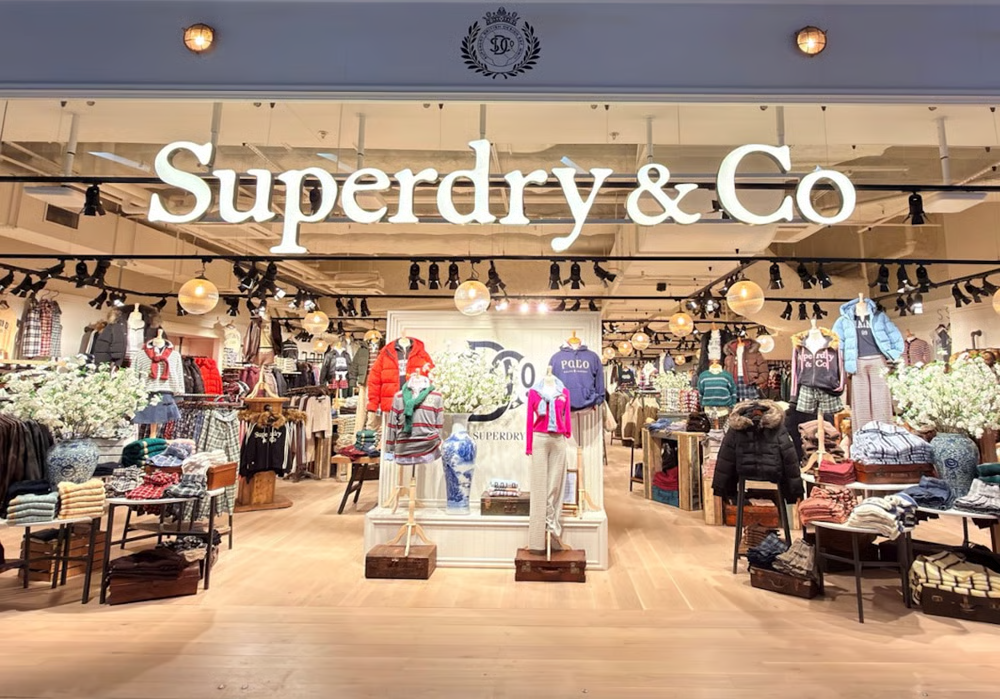
Featured photograph: the Superdry & Co Paris flagship at Westfield Forum des Halles. Photo: Superdry, via FashionUnited.
A relocation that changes the retail proposition
Superdry says its new European flagship at Westfield Forum des Halles opened in late October 2026. Its November company update describes a larger, more prominent location and a brighter presentation, combining womenswear and menswear with Bench and a curated vintage concession. The November coverage therefore concerns an already-open store, rather than a future opening. Source: Superdry company update.
The relocation within the same shopping centre is confirmed in a FashionUnited interview with founder and CEO Julian Dunkerton, published on 13 November. That interview is labelled partner content. It is useful evidence of management’s strategy, but its performance statements should be read as company claims.
STAR Brands analysis: moving within an existing centre creates a useful comparison with the previous operation. However, a larger unit can increase sales while producing a weaker return on space or capital. A proper assessment would isolate the effects of location, merchandise, opening publicity and investment before attributing any improvement to the new format.
The womenswear signal needs a comparable baseline
In the interview, Dunkerton reports that womenswear represented 62% of Paris sales since opening, compared with 35% of Superdry’s business historically. Those figures describe different scopes and periods. They are not a like-for-like growth rate, and they do not establish store profitability.
The practical question is whether the category attracts additional customers and profitable baskets. Operators should examine category sales alongside selling space, stock investment, gross margin after markdowns and returns, and repeat purchasing. A higher share can result from stronger womenswear, weaker sales elsewhere, or both. The published figures alone cannot distinguish these outcomes.
Merchandising decisions should follow that evidence. More womenswear may require different size availability, replenishment patterns, fitting-room capacity and staff deployment. An encouraging opening mix is a reason to investigate these requirements, not enough evidence to copy the allocation across every territory.
Multiple brands bring operating and contractual questions
Our commercial interpretation is that the Paris offer gives the store several reasons for a customer to visit. That may broaden demand, but each category must justify its use of space and working capital.
A concession can have very different economics from stock purchased wholesale. Before adapting a similar format, a prospective operator should establish who owns inventory, sets prices, carries unsold-stock risk, funds promotions and handles returns. Vintage merchandise also calls for clear sourcing, condition standards and product descriptions. These are diligence questions; the reviewed sources do not disclose the Paris concession’s commercial terms.
The same discipline applies to brand rights. Permission to operate one brand does not automatically include the right to sell another label, sublicense a territory or reproduce a flagship’s assortment. The Paris announcement should not be treated as an offer of an available franchise, a disclosed franchise agreement or a mandate for Star Brands to appoint partners.
European rollout ambitions need staged commitments
Dunkerton’s interview sets out plans for around 20 new stores across the UK and mainland Europe over the following 12 months. This is a management ambition, not a count of completed openings or evidence that every lease has been signed.
For a landlord, investor or operating partner considering a comparable expansion, three tests matter:
- Store contribution: model rent, service charges, staffing and stock losses against a realistic trading range. Separate opening expenditure from recurring costs.
- Cash requirements: stress-test the time between paying suppliers and receiving customer cash, including slow-selling sizes and seasonal inventory.
- Replication: require evidence from mature trading periods and relevant local catchments before committing to a multi-store programme.
A flagship can help communicate a repositioned brand and test customer response. Its investment value ultimately depends on repeatable economics and clearly allocated operating responsibilities. The reviewed announcements do not provide Paris fit-out expenditure, store profit, franchise fees or investment payback; those figures should not be inferred from the opening.
STAR BRANDS CONSULTING GROUP · PRIVATE INVESTOR ADVISORY
Assess a retail expansion before committing capital.
Test channel structure, store economics and operator readiness. Our mandate-led assessment helps qualified investors and operators separate market potential from unverified franchise availability.
Territory intelligence · Operator readiness · Investment structuring
Independent advisory. We do not represent or grant rights for the featured brand unless separately authorised. Territory availability, appointments and commercial outcomes are never guaranteed. Engagement follows mandate qualification and applicable activation terms.
Sources and image credit
- Superdry’s company updates: Paris opening timing, location and merchandise mix; reviewed 21 November 2026.
- FashionUnited’s Julian Dunkerton interview, 13 November 2026: relocation, reported sales mix and expansion plans. Labelled partner content by the publisher.
Featured image: entrance and merchandise displays at the Superdry & Co Paris flagship, Westfield Forum des Halles. Photo: Superdry, credited in FashionUnited’s 13 November 2026 interview.
Leave a Reply