
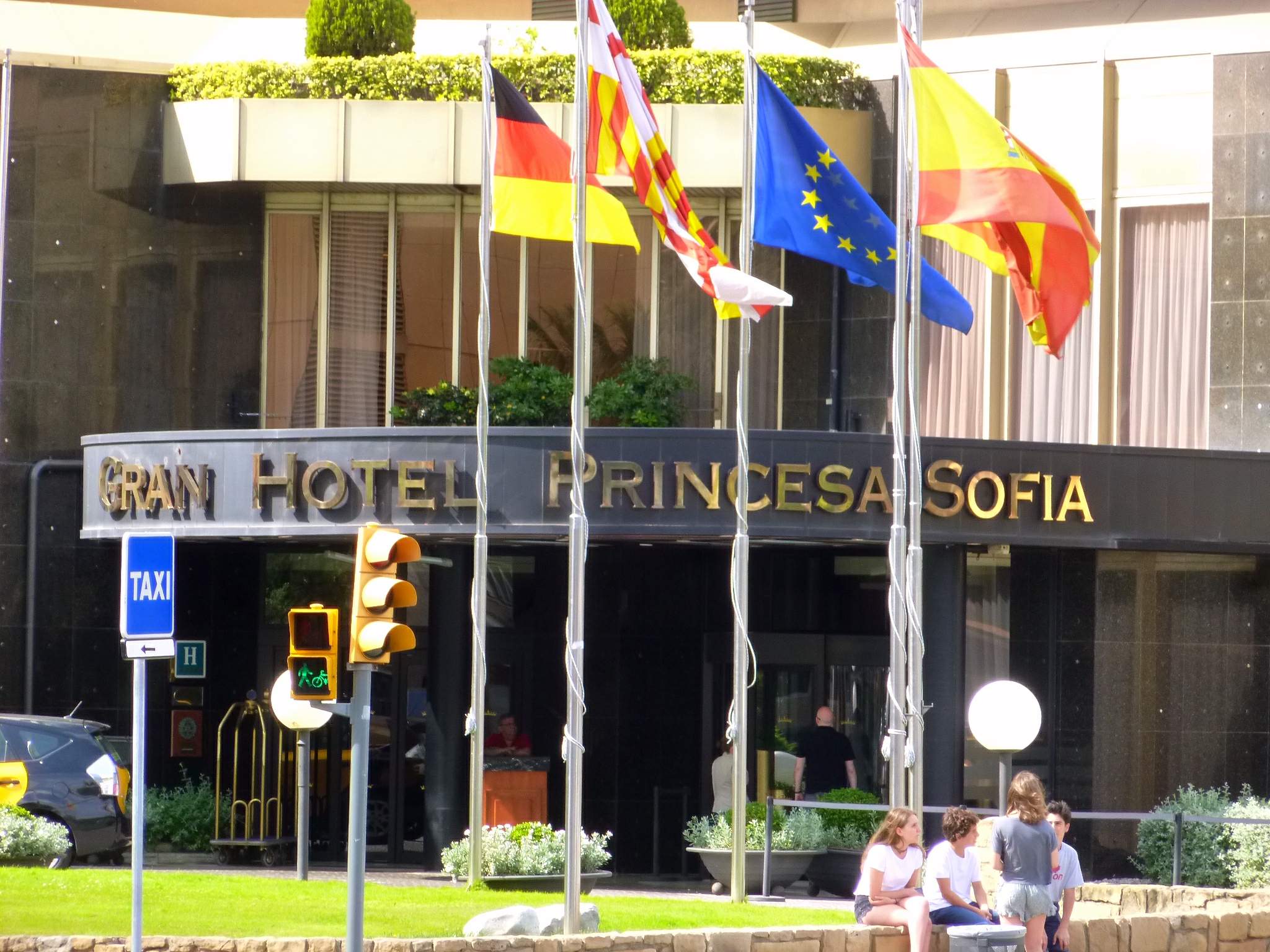

RIU has bought a substantial existing hotel to enter Barcelona. Its planned April 2027 management start makes the transition from asset ownership to operational control the commercial issue to watch.
What RIU announced
In an announcement dated 30 October 2026, RIU confirmed the purchase of Hotel Princesa Sofia from Blasson Property Investments and BNP Paribas Asset Management Alts. The company says it will assume management on 1 April 2027, with the property joining its Riu Plaza urban line as the planned 14th hotel.
The property has 465 rooms across 19 floors and extensive meeting and event facilities. Its location near Avenida Diagonal and Camp Nou places it within Barcelona’s Les Corts–Pedralbes area. RIU says it spent more than a decade seeking an investment opportunity in the city.
The announcement does not disclose the purchase price, financing structure or a refurbishment budget. It therefore provides no basis for calculating an acquisition yield or expected return.
Acquiring a location is only one part of market entry
The following is Star Brands Consulting Group’s commercial analysis, rather than a statement of RIU’s internal plans.
Buying an existing hotel can give a brand immediate access to a substantial physical footprint. It also creates a different diligence problem from developing a new building: the buyer must understand what it is inheriting, what must change and how those changes affect a trading business.
Investors should distinguish the asset decision from the operating decision. A desirable location does not, by itself, establish that the room mix, meeting spaces, service model and capital requirements fit the incoming brand. A useful investment case would test those elements separately before combining them in a single return forecast.
The handover needs a commercial plan
The interval before management begins gives operators a clear deadline against which to assess readiness. Three workstreams merit attention in comparable acquisitions:
- Reservations and distribution: map future bookings, deposits, rates and channel commitments before changing reservation systems or brand-facing sales channels. Commercial continuity depends on accurate obligations as well as technical migration.
- Events and account relationships: establish who owns each client relationship and which service commitments survive the handover. Group business can involve long booking lead times, making early responsibility mapping particularly useful.
- People, suppliers and capital: distinguish essential opening-day requirements from improvements that can follow. Confirm decision owners, procurement lead times and training needs before promising a revised guest experience.
These are diligence priorities, not evidence that any such issue exists at Princesa Sofia. RIU has not disclosed its detailed transition programme.
What brand owners and investors should take from the deal
The broader lesson is to evaluate market entry as a sequence of commitments. Securing a property, assuming management and delivering the intended brand proposition are separate milestones, each with its own dependencies.
For investors, the missing financial terms matter: a prominent acquisition cannot establish that similar assets are attractively priced. For operators, the useful benchmark is whether the handover plan reconciles existing obligations with the incoming operating model. For brand owners, an acquired footprint becomes commercially valuable only when the organisation can support it consistently.
This transaction does not announce franchise availability, third-party development rights or an invitation to invest.
Star Brands Consulting Group supports businesses assessing market-entry routes and operator readiness. Contact the team to discuss the commercial questions relevant to your expansion plans.
Leave a Reply