
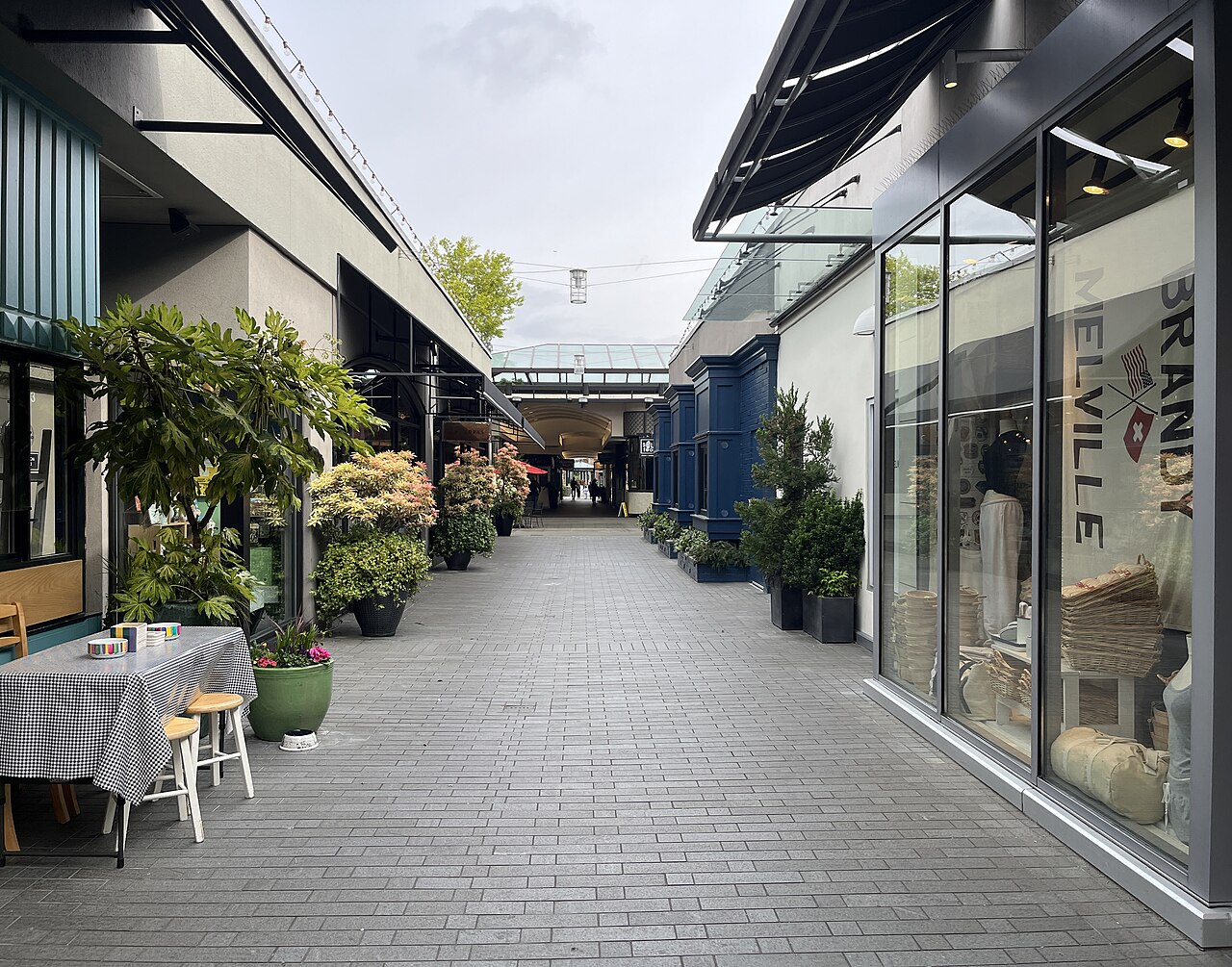

Simon’s agreement to buy Seattle’s University Village puts an established mix of local businesses and national brands under prospective new ownership. For retailers, the commercial question is how that mix—and the cost of participating in it—evolves.
An agreement, with completion still ahead
Simon announced on 30 October 2026 that a subsidiary had agreed to acquire University Village. The company expects completion in the fourth quarter of 2026, subject to customary closing conditions. The announcement does not disclose a purchase price, acquisition yield or financing structure.
The open-air centre has more than 100 businesses and services and nearly 600,000 square feet, according to the announcement. Its named occupiers include Apple, RH Gallery, Sézane, Lululemon, Aritzia, Vuori and Din Tai Fung, alongside local businesses. Simon describes the acquisition as consistent with its focus on distinctive, high-quality properties in strong markets.
Why the tenant mix matters
The following is Star Brands Consulting Group’s commercial analysis, not a statement of Simon’s future leasing policy.
A shopping destination can offer a brand access to customers already drawn by neighbouring stores and restaurants. That proposition depends on the actual combination of uses: repeat dining visits, planned shopping trips and local services need not produce the same conversion rate for every tenant.
For an incoming retailer, a prestigious address is therefore only the start of the assessment. Site selection should test customer overlap with neighbouring occupiers, trading patterns by day and hour, visibility from the routes shoppers actually use, and the store’s role relative to existing outlets and online sales. A landlord’s wider portfolio cannot substitute for that location-level work.
Ownership transition creates questions, not automatic openings
The announcement does not offer franchise rights, promise vacant units or set out a tenant-replacement programme. Brand owners and operators should avoid treating a property transaction as evidence of immediate leasing availability.
Existing tenants should establish who will handle leasing, marketing and property operations after completion, and whether any proposed changes affect their own agreements. Prospective tenants should seek a complete occupancy-cost schedule, including service charges and marketing contributions, before comparing this location with alternatives. Any proposed fit-out programme should be assessed against the remaining lease term and realistic store-level cash generation.
What investors should watch next
Without disclosed consideration or property-level income, this announcement cannot support a credible acquisition-yield calculation. Nor does one transaction establish a broad recovery in retail property values.
The useful next evidence would be confirmed completion, any disclosed investment programme, tenant retention and leasing activity. For a retailer considering expansion, the parallel test is whether projected sales can cover occupancy, staffing, inventory and refurbishment costs under a conservative scenario. For the property owner, preserving the reasons customers visit may matter as much as adding new names.
The wider lesson for cross-border brands is practical: evaluate the local retail ecosystem and the operating economics together, even when the prospective landlord is familiar.
Source
Simon: “University Village Agrees To Be Acquired by Simon,” 30 October 2026. Announcement date and expected completion period are distinct; completion is not asserted here.
For support assessing retail locations, operating readiness and market-entry plans, contact Star Brands Consulting Group.
Leave a Reply