
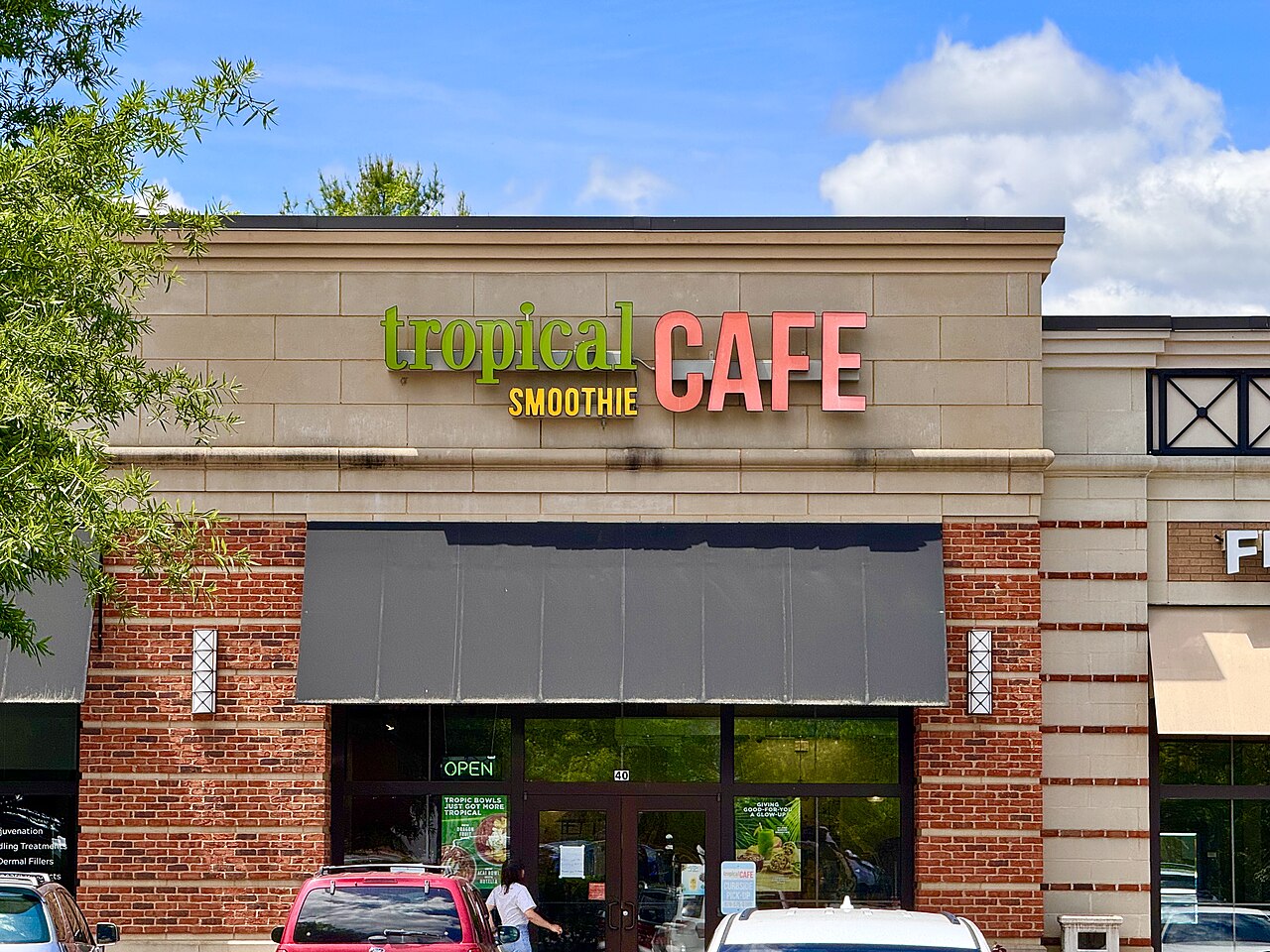

Tropical Smoothie Cafe’s newly announced 40-unit development agreement with Aurify Kingstar is more than a store-count story. It is a test of whether an experienced multi-brand operator can convert four distinct Northeast territories into a dense, supportable network.
What the agreement actually covers
On 19 October 2026, Tropical Smoothie Cafe announced a 40-unit franchise development agreement with Aurify Kingstar covering Albany, Westchester County and the Bronx in New York, plus Western Connecticut. The first cafe is planned for early 2027.
The announcement date should not be treated as the agreement’s execution date: the company did not disclose when the contract was signed. It also did not publish the development term, unit-by-unit opening schedule, exclusivity provisions, investment commitment, fees or expected sales. Those omissions matter because a 40-unit headline describes contractual ambition, not delivered capacity.
Tropical Smoothie Cafe said it had more than 1,750 cafes and was targeting its 1,800th location by the end of 2026. That is a company objective, not a guaranteed outcome. The same announcement says New York-based Aurify Kingstar’s team has more than 25 years of restaurant experience and has developed, operated or acquired more than 300 restaurants, including franchised Five Guys, Wingstop and Le Pain Quotidien locations alongside proprietary concepts.
Why operator qualification is the commercial centre of the deal
Large development agreements are execution systems. The relevant question is not simply whether an operator can finance the first site, but whether it can repeatedly source real estate, secure approvals, recruit and train management, open supply lanes, localise marketing and protect brand standards across several markets at once.
Aurify Kingstar’s disclosed history does not prove that every planned Tropical Smoothie Cafe will open on time. It does, however, explain the brand’s partner choice. A group with existing multi-unit infrastructure should begin with more operating leverage than a first-time franchisee building its platform from scratch. That is an analytical inference from the operator’s stated experience—not a forecast of results.
The territory map favours clusters, not isolated dots
Albany, Westchester County, the Bronx and Western Connecticut are not one uniform market. They combine different real-estate conditions, labour pools, customer missions and competitive sets. The commercial opportunity lies in sequencing them as operating clusters rather than treating 40 restaurants as interchangeable openings.
Cluster development can create advantages in field supervision, local media, training, maintenance and distribution. It can also concentrate risk if the operator overestimates demand, signs leases ahead of organisational capacity or expands before early stores establish repeatable unit economics. The announcement does not disclose how the territories are phased, so the precise rollout logic remains to be tested.
What brand owners should test before awarding a large territory
- Capacity beyond capital: whether the operator has a dedicated development team, field leadership and opening support for overlapping markets.
- Portfolio conflicts: how management attention, real-estate priorities and supplier relationships will be allocated across existing and new concepts.
- Phasing discipline: whether later commitments depend on verified site performance, staffing depth and support capacity.
- Territory governance: how missed milestones, market substitutions, transfers and underdevelopment will be handled.
- Local-market adaptation: which parts of the offer, site format and marketing plan require adjustment without weakening brand consistency.
What operators and investors should test
The headline number should be converted into a capital and capability schedule. Investors need to understand how many sites may be under development simultaneously, when lease and construction exposure peaks, what management layers must be hired ahead of revenue, and whether early stores can support later growth without optimistic assumptions.
They should also separate territory access from site approval. A development agreement may establish the right or obligation to pursue units, but each restaurant still depends on viable property, permitting, construction, staffing and launch execution. Nothing in the announcement establishes guaranteed locations, returns or resale value.
The practical commercial implication
This deal illustrates a wider shift in franchise growth: mature brands increasingly use experienced multi-brand platforms to enter complex, high-cost markets at meaningful scale. That can accelerate development, but it also makes operator concentration, governance and portfolio-wide capacity more important.
For brand owners, the right partner is not merely the bidder willing to sign for the most units. It is the operator whose organisation, market knowledge and capital plan can support a credible sequence. For operators, the value of a 40-unit award depends on disciplined phasing—not the size of the announcement.
Sources
- Tropical Smoothie Cafe: 40-unit New York and Connecticut development agreement, 19 October 2026.
- Wikimedia Commons image record, photographed 6 May 2025.
Planning a multi-territory franchise rollout or evaluating an operating partner? Star Brands Consulting Group’s Market Entry Advisory helps brands, investors and operators test territory logic, partner capability, capital exposure and execution readiness before committing resources.
Leave a Reply