
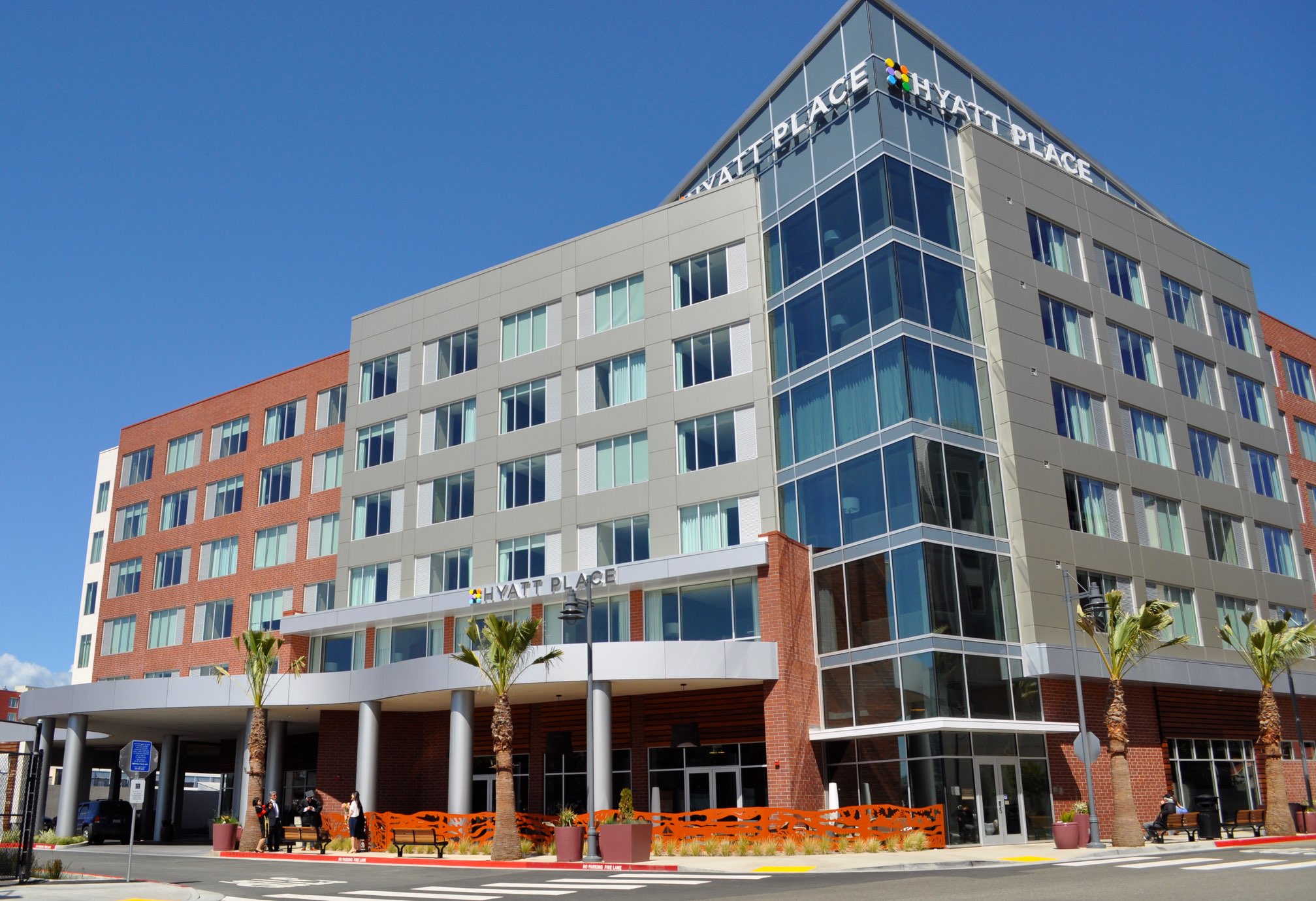

Hyatt is attacking hotel-development friction on three fronts: a dedicated financing route for qualified Hyatt Studios projects, a smaller Hyatt Place prototype and more conversion-led brands. The commercial question is not whether those tools sound attractive, but whether they make a specific site financeable and resilient after realistic local costs are applied.
On 5 October 2026, Hyatt Hotels Corporation outlined a development strategy built around capital access, prototype efficiency and faster conversion paths. The company said it sees room to expand across more than 300 US submarkets and reported an average of four Hyatt hotels per market, compared with 14 among its largest competitors. That comparison is Hyatt’s own measure of white space, not an independent demand forecast.
Financing becomes part of the brand proposition
Hyatt said its planned program with HALL Structured Finance is being designed for qualified new-build Hyatt Studios projects in the United States. The proposition is a dedicated source of construction finance with the potential for greater leverage than conventional structures at market interest rates, subject to underwriting and project qualifications.
HALL’s current program page advertises loan-to-cost ratios of up to 75–80% and a three-year term, with the possibility of two one-year extensions subject to a debt-service coverage ratio test. Those are stated program parameters, not a promise that any applicant will receive maximum leverage or an extension.
This matters because a franchisor’s development offer increasingly competes on more than flag recognition and reservation-system reach. If a brand can help qualified owners assemble a workable capital stack, it can influence which projects break ground. But financing attached to a brand also changes diligence: owners must compare the full economics, covenants, recourse position, interest-rate exposure and exit assumptions against independent alternatives.
The prototype is designed to lower the capital burden
Hyatt says the Gen 4 Hyatt Place prototype reduces the standard key count from 140 to 127, cuts overall building area by nearly 20% and moves from a six-storey steel-and-concrete structure to a four-storey wood building. The company projects that the combined changes will reduce building costs by approximately 25%.
That 25% figure is a forward-looking company estimate, not a documented saving for every development. Local building codes, labour, materials, land constraints, parking, fire-safety requirements and room-rate potential can materially change the result. The useful signal is the design direction: fewer keys, less area and a simpler structural system are being used to lower the capital required before a hotel opens.
Hyatt is also updating its Hyatt Studios prototype by reducing standard room count and total square footage while adding an expanded three-bay lobby, required meeting space and revised building systems. Hyatt reported a pipeline of more than 70 Hyatt Studios hotels representing over 8,200 rooms. Pipeline figures describe signed or anticipated development, not completed supply.
Conversions provide a second route to market
The third lever is conversion. Hyatt positioned The Unbound Collection by Hyatt and JdV by Hyatt as ways to retain the character of distinctive hotels while adding Hyatt distribution and loyalty infrastructure. In its Essentials portfolio, Hyatt said Hyatt Select has approximately 50 hotels in the pipeline and Unscripted by Hyatt has 15.
Conversions can avoid parts of the ground-up construction cycle, but they are not automatically low-cost. A prospective owner still needs a property-improvement plan, code and life-safety assessment, technology budget, brand-standard gap analysis and a realistic estimate of revenue disruption during works. A flexible flag only creates value if the asset can satisfy brand requirements without destroying the acquisition thesis.
What owners and investors should test
- All-in capital, not headline leverage. Model lender fees, reserves, interest carry, contingency and extension tests alongside the franchise and property-improvement costs.
- Prototype fit. Confirm that the stated design efficiencies survive local planning, code, site and parking constraints.
- Demand before white space. A market with limited Hyatt supply is not necessarily undersupplied. Test occupancy, rate depth, seasonality, generators and competing pipeline.
- Exit and refinancing. Stress-test the project for slower ramp-up, higher interest costs and a more conservative terminal value.
- Conversion disruption. Price the works, downtime and operational transition required to reach brand standards.
The commercial implication
Hyatt’s strategy shows how hotel brand competition is moving closer to the owner’s balance sheet. Capital access, prototype design and conversion flexibility are becoming integrated development tools rather than separate conversations. For brand owners, that can widen the operator funnel. For investors, it makes comparison more demanding: the flag, financing and building model must be evaluated as one system.
Hyatt reported a global pipeline of more than 154,000 rooms and a portfolio of more than 1,500 hotels and all-inclusive properties in 83 countries as of 30 June 2026. The scale of that pipeline makes execution discipline important. A lower-cost prototype can improve feasibility, but it cannot substitute for disciplined site selection, operator capability or conservative underwriting.
Star Brands Consulting Group supports investors and brand owners with independent market-entry, partner and development-structure assessment. Learn more about our Market Entry Advisory.
Leave a Reply