
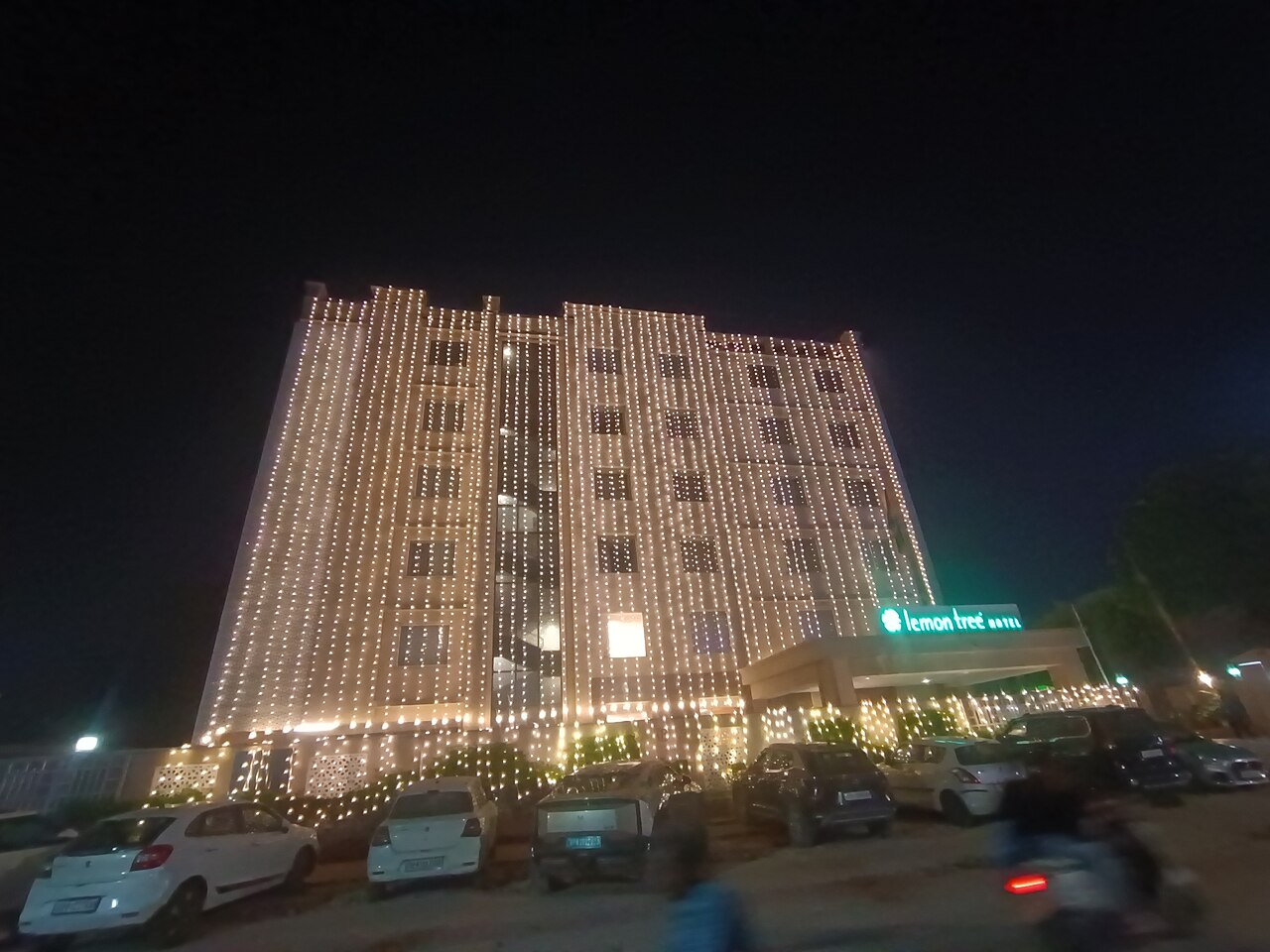

Lemon Tree Hotels has signed a memorandum of understanding with Omaxe covering about 4,000 hotel rooms across multiple Indian markets. The structure offers a useful test of how a hotel operator can scale through developer capital—and why headline pipeline growth is only the start of the commercial work.
What the 4,000-key MoU covers
In an official release dated 16 October 2026, Lemon Tree Hotels said its wholly owned subsidiary, Carnation Hotels, had entered an MoU with real-estate developer Omaxe to operate approximately 4,000 rooms. Proposed locations span Lucknow, Vrindavan, Amausi, Amritsar, Ghaziabad, Greater Noida, Kaushambi and Faridabad.
The company described the MoU as its largest single operating arrangement and said it would lift Lemon Tree’s pipeline to nearly 16,000 rooms. That makes the proposed Omaxe portfolio roughly one quarter of the enlarged pipeline—an arithmetic comparison, not a forecast of openings or revenue.
The announcement is a memorandum of understanding, not evidence that 4,000 rooms are already operating. Conversion will depend on project-level agreements, development execution, approvals, construction, brand allocation and pre-opening readiness.
Why the capital structure matters
The commercial logic is a division of roles. Omaxe brings development capability and describes a sale-led model intended to support capital deployment. Lemon Tree contributes brands, operating systems and hotel-management expertise. For the operator, that can extend distribution without owning every underlying property; for the developer, a recognised operating platform can strengthen the hospitality proposition and help standardise execution.
This is the core promise of asset-light hotel growth: brands and operators can expand fee-generating networks while property capital sits elsewhere. But the arrangement does not remove risk. It reallocates risk between the developer, operator and, depending on the final structure, purchasers or other capital providers.
The Economic Times reported that the programme covers ten projects, involves an estimated ₹4,000 crore and has delivery windows ranging from nine months to five years. Those figures were reported by the newspaper; Lemon Tree’s official release did not disclose project-level capital, financial terms or individual opening dates.
Pipeline scale is not operating capacity
For investors and brand owners, the useful distinction is between announced pipeline, contracted pipeline, rooms under construction and rooms open. A large MoU can create strategic optionality, yet its value emerges only as sites move through design, financing, approvals, construction, commissioning and ramp-up.
That makes conversion quality more important than the headline number. A 4,000-room commitment concentrated with one developer can accelerate expansion, but it also creates counterparty and execution concentration. Delays across a small number of large schemes could materially change the timing of fee income and market coverage.
The market mix raises an operating challenge
The named locations are not commercially uniform. The release points to transit hubs, pilgrimage destinations and commercial districts. Each demand pattern requires different assumptions about room mix, food and beverage, group business, seasonality, pricing, staffing and distribution.
A single development relationship therefore does not justify a single operating template. Brand selection and product design should be site-specific. The right hotel format for a pilgrimage-led destination may not be the right fit for an airport-linked or corporate catchment, even when the projects share a developer and operator.
What remains to be negotiated
The official announcement does not specify which Lemon Tree brands will be assigned to individual projects, the room count at each site, management fees, performance tests, owner obligations, exclusivity, termination rights or opening milestones. These are not minor omissions: they determine how the MoU translates into durable operating economics.
- Project conversion: Which sites move from MoU to binding hotel-management agreements, and by when?
- Capital certainty: How is each development funded, and what protections apply if delivery is delayed?
- Brand-market fit: Which brand and service model matches each catchment and expected rate position?
- Control and standards: Who approves design, procurement, technology, pre-opening budgets and key operating appointments?
- Performance alignment: How do fee structures, owner returns, performance tests and exit rights allocate risk?
A practical scorecard for operators and investors
Before treating the announcement as realised growth, stakeholders should track the percentage of proposed rooms that reach binding contract, construction and opening; time from signing to launch; capital and schedule variance; pre-opening readiness; and, after opening, occupancy, average daily rate, revenue per available room, fee collection and owner returns.
The broader lesson is that asset-light expansion is not capital-free growth. It depends on partner qualification, development funding, enforceable operating controls and disciplined pipeline reporting. The Lemon Tree–Omaxe MoU is commercially significant because of its scale, but its ultimate value will be decided project by project.
Star Brands Consulting Group supports brands, developers and investors evaluating cross-market expansion structures, operating partners and execution risk. Explore our Market Entry Advisory.
Leave a Reply