
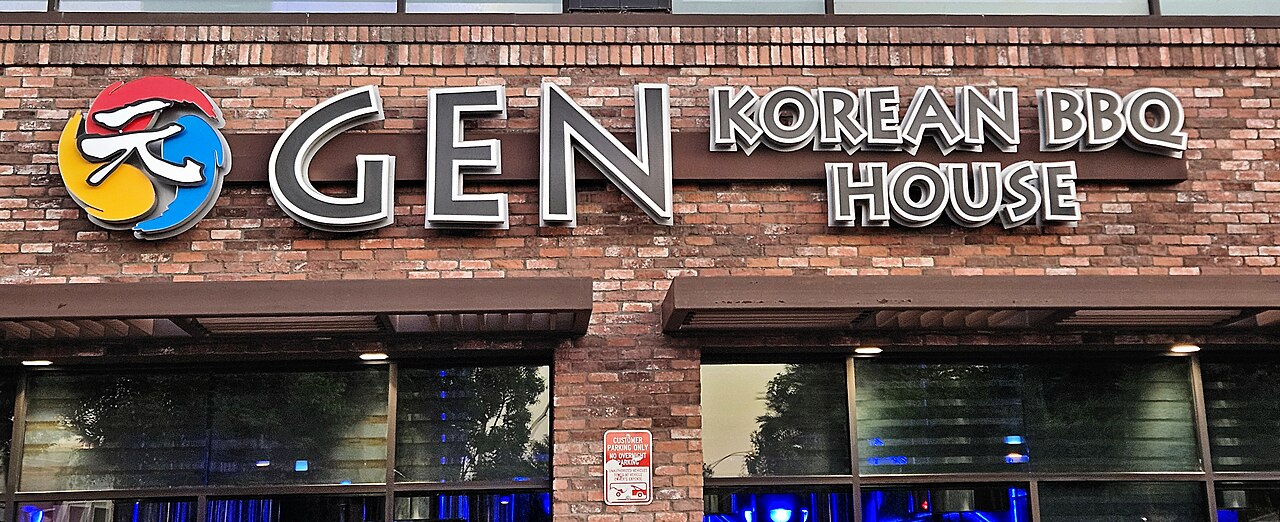

GEN Restaurant Group’s proposed $100 million transaction with Chubby Group is more than a restaurant sale. It would separate ownership of the GEN brand and packaged-food business from the operation of 47 U.S. restaurants, making licensing, lease transfer and conversion discipline central to whether the structure works.
GEN announced on 14 October 2026 that its board had approved a binding letter of intent with Chubby Group. Under the proposed arrangement, Chubby would take over operations at 47 U.S. restaurants through a four-phase transition lasting 12 months. GEN would retain the GEN brand, its consumer-packaged-goods business and about three restaurants for training, staffing and product development.
Chubby’s separate announcement on 15 October added that the proposed scope includes four development sites and that Chubby would receive a perpetual licence to the GEN brand. It also disclosed a $50 million Series A led by Prysm Capital at a stated $500 million valuation. That funding announcement should not be read as proof that the acquisition price is fully funded by the round: Chubby said the capital would support supply-chain expansion and new openings, while restaurant conversions would be funded from its own capital.
The transaction is not yet a completed acquisition
The announcement is commercially significant, but the distinction between a binding letter of intent and a closed transaction matters. GEN said the parties were working towards closing within 30 days of its announcement. Completion remains subject to definitive agreements, lease and licence transfers, regulatory approvals and other conditions.
That means the first operational test is not menu development or marketing. It is whether the parties can secure the location-by-location consents needed to transfer a geographically dispersed restaurant estate. Landlords, permits, alcohol licences, vendor arrangements, employees and local operating requirements can all affect the timetable.
The companies have described a four-phase handover, with Chubby targeting the first 12 locations for 1 November 2026. GEN would retain operating profits from each restaurant until that location transfers. The sequencing therefore affects cash flow for both sides and makes the definition of a completed handover commercially important.
Brand ownership and restaurant control would split
The most unusual feature is the separation of the operating estate from the underlying brand. GEN plans to remain publicly traded, retain full ownership of its name and packaged-food platform, and license the restaurant brand perpetually to Chubby.
For GEN, that structure preserves the consumer-facing asset that links restaurants with its retail products. For Chubby, it provides an established restaurant footprint without requiring an outright purchase of the trademark. The trade-off is continuing interdependence: the brand owner needs restaurant execution that protects consumer trust, while the operator needs durable rights, usable brand standards and enough flexibility to improve the units.
A perpetual licence does not remove governance questions. Investors and operators should want clarity on quality control, menu and design approvals, territorial scope, digital channels, customer data, product sourcing, audit rights, enforcement, termination triggers and what happens if the restaurant and packaged-food strategies diverge.
Conversion discipline will determine the operating outcome
Chubby said it intends to move the acquired restaurants onto its supply chain and Chubby Club membership ecosystem. Locations may be relaunched as GEN X, described as a wagyu-forward evolution of the current concept, or converted to another Chubby portfolio brand.
That creates a portfolio-allocation decision rather than a single-format rollout. Each restaurant must be assessed for local demand, lease economics, kitchen and ventilation constraints, brand equity, conversion cost and disruption risk. A unit that benefits from retaining the GEN identity may not justify the same capital plan as one better suited to a different concept.
The proposed price also should not be reduced to a simple cost per restaurant. The scope includes operating locations and development sites, while consideration includes a term note and a potential conversion feature rather than an identified all-cash payment for each unit. GEN said it could convert an unpaid note balance into Chubby equity at a $1.5 billion valuation after completion. Without the definitive agreements, the payment schedule, security package and location-level allocations remain unresolved.
GEN is using the deal to pivot towards packaged food
GEN’s rationale becomes clearer in its latest financial disclosures. In its quarter ended 30 June 2026, the company reported that its packaged-food division delivered its strongest quarter to date, with revenue up 341% sequentially and products in nearly 2,000 supermarkets and club stores. At the same time, food costs at restaurant level rose to 39.1% of revenue and occupancy expenses reached 9.6%.
The proposed transaction would therefore shift GEN away from a capital- and lease-intensive restaurant model while retaining the brand and concentrating management on consumer products. GEN said the deal could substantially reduce approximately $160 million of lease liabilities and allow it to eliminate outstanding debt, although those outcomes remain company expectations rather than completed results.
What investors, operators and brand owners should test
- Transfer certainty: identify which landlord, licensing and regulatory consents are required for every restaurant and development site.
- Licence governance: define the operator’s rights and the brand owner’s controls across restaurants, retail products, delivery, digital channels and future formats.
- Unit segmentation: decide which sites should remain GEN, become GEN X or convert to another concept using location-level evidence rather than a uniform plan.
- Capital sequencing: match conversion spending to actual handover dates, disruption periods and post-conversion operating targets.
- Counterparty exposure: assess the term note, collateral, guarantees and equity-conversion option rather than treating the headline value as cash received at closing.
- Brand spillover: monitor how restaurant execution affects GEN’s packaged-food credibility and how retail expansion influences restaurant positioning.
The strategic logic is visible: GEN wants a lighter operating model centred on consumer products, while Chubby wants scale for its supply chain, membership platform and portfolio of Asian dining concepts. The commercial result will depend on the agreements beneath the headline—particularly the licence, lease transfers, conversion budgets and location-by-location transition plan.
Star Brands Consulting Group supports brands, operators and investors evaluating acquisition-led expansion, licensing structures and market-entry execution. Explore our Market Entry Advisory.
Sources
- GEN Restaurant Group, binding LOI announcement, 14 October 2026.
- Chubby Group, Series A and proposed acquisition announcement, 15 October 2026.
- GEN Restaurant Group Form 10-Q for the quarter ended 30 June 2026, filed 10 August 2026.
Leave a Reply