
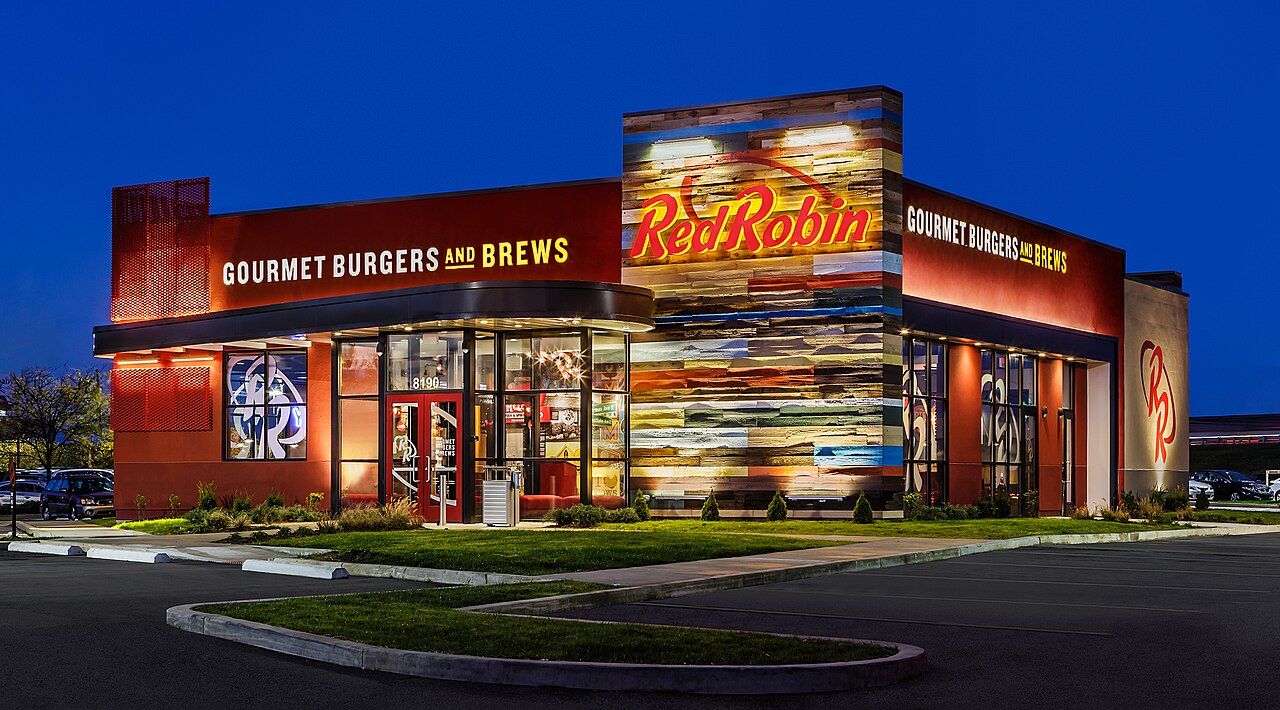

Red Robin sold 108 company restaurants for about US$89.4 million, converted them to franchised operations and then replaced its secured credit facility. The sequence shows why a refranchising programme must be judged on operator quality, retained obligations and what the franchisor does with the capital—not unit transfers alone.
Refranchising is often presented as a simple change in ownership: a brand sells restaurants and collects royalties instead of store-level revenue. Red Robin Gourmet Burgers’ 2026 transactions show the more consequential version. The company used a large transfer of operating assets to reduce debt, move restaurant execution to three multi-unit operators and create the conditions for a new five-year credit facility.
The completed steps are material. In a 1 September 2026 announcement filed with the US Securities and Exchange Commission, Red Robin said it had sold 108 company-owned restaurants for approximately US$89.4 million in gross proceeds. On 5 October, the company announced that it had completed a new US$115 million secured credit facility on 2 October.
Three buyers, three regional operating platforms
The 108 completed transfers were divided among three buyer groups:
- Op Burgers: 61 restaurants closed for US$55.9 million across Kentucky, Indiana, Maryland, Ohio, North Carolina, Pennsylvania, South Carolina and Virginia.
- Kuber Oregon and Kuber Washington: 17 restaurants acquired for US$10 million in Oregon and Washington.
- Evergreen Dining: 30 restaurants acquired for US$23.5 million in Washington and Western Idaho.
Eight additional Op Burgers restaurants were not part of the completed 108 at the announcement date. Red Robin said those sites were expected to close by the end of its 2026 fiscal year, subject to applicable liquor-licence transfers, for approximately US$6.6 million. If completed on the disclosed terms, the three transactions would cover 116 restaurants and approximately US$96 million in gross proceeds.
That distinction matters. The 108-unit sale is completed; the additional eight sites and their proceeds remain a company expectation until closing conditions are satisfied.
The operating model changes with the ownership
The restaurants did not disappear from the system. The relevant SEC filings say the buyers would operate the transferred locations as franchised Red Robin restaurants under long-term franchise agreements. Economically, Red Robin exchanged direct ownership of restaurant cash flows and capital needs for franchise relationships, fees and brand-control obligations.
That can reduce the franchisor’s direct exposure to store-level labour, local management and future refurbishment spending. It also increases dependence on the franchisees’ balance sheets, leadership pipelines and compliance systems. A transfer therefore succeeds only if the buyers can fund reinvestment while maintaining food, service, technology and brand standards across geographically dispersed portfolios.
The disclosed gross proceeds equate to roughly US$828,000 per completed restaurant. That is an arithmetic observation, not a valuation of every site: the transactions involve different markets, assets, liabilities and closing conditions. Investors should not treat the average as a store appraisal or assume it represents the value of the underlying real estate.
Refranchising was the first step in a financing sequence
Red Robin said net transaction proceeds would be used to pay down outstanding debt and advance refinancing priorities. The new facility comprises a US$90 million term loan and a US$25 million revolving line, matures on 2 October 2031 and may be increased by up to US$20 million subject to lender participation.
The company’s 5 October Form 8-K says the new borrowings refinanced the prior credit agreement and can support working capital, capital expenditure and permitted acquisitions. It also says the facility is secured by substantially all assets of the borrower and guarantors. This is not simply “asset-light growth”; it is a balance-sheet restructuring with covenants, scheduled term-loan amortisation and continuing execution risk.
What investors and operators should test
For brand owners considering a comparable transaction, four questions are more useful than the headline unit count:
- Operator capacity: Does each buyer have sufficient liquidity, field leadership, training capability and succession depth for the acquired portfolio?
- Retained exposure: Which lease guarantees, indemnities, technology obligations or other contingent liabilities remain with the franchisor after closing?
- Reinvestment discipline: Are remodels, equipment replacements and local marketing commitments documented, funded and enforceable?
- Capital use: Will proceeds reduce financial risk and improve the system, or merely cover near-term pressure without fixing restaurant economics?
Prospective franchisees and lenders should also examine territory concentration. Large regional packages can produce stronger operating density and shared infrastructure, but they can make the system more dependent on a small number of counterparties. The commercial advantage of scale should be tested against default concentration, local-market exposure and the franchisor’s practical step-in options.
The commercial lesson
Red Robin’s transactions illustrate a broader principle: refranchising creates value when capital structure, operator capability and brand governance improve together. A restaurant sale can release cash quickly, but the enduring economics depend on the quality of the replacement franchise platform and the obligations that survive the transfer.
For investors, the next evidence will be operational rather than promotional: completion of the remaining eight transfers, debt and liquidity trends, franchisee reinvestment and the performance of the transferred markets. For operators, the lesson is equally direct—buying a large portfolio is not only an acquisition; it is a long-term commitment to fund and execute the franchisor’s system at scale.
Star Brands Consulting Group supports brand owners and operators with market-entry and partner-qualification advisory, including territory strategy, operating-partner assessment and agreement-readiness analysis.
Sources
- Red Robin: completion of 108 restaurant sales, 1 September 2026
- Red Robin: completion of refinancing, 5 October 2026
- Red Robin Form 8-K: new credit facility, filed 5 October 2026
- Red Robin Form 8-K: Evergreen agreement, filed 1 June 2026
- Red Robin Form 8-K: Op Burgers and Kuber agreements, filed 15 June 2026
Leave a Reply