
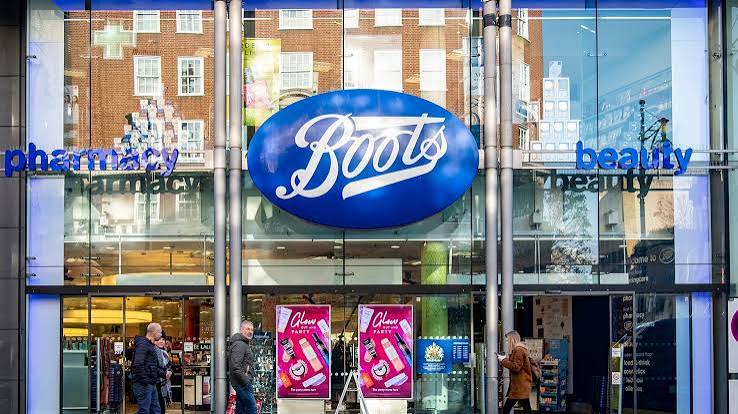
Wittington Investments and Fairfax Financial have agreed to acquire Boots in a transaction valued at approximately US$8.9 billion including assumed debt. Although the partners expect to hold equal equity stakes, Wittington will have operating control—a structure that puts governance, capital allocation and execution authority at the centre of the investment case.
The deal combines equal ownership with unequal control
Fairfax announced the agreement on 7 October 2026. The transaction covers Boots’ retail operations in the United Kingdom and Ireland, Boots Opticians, No7 Beauty Company, and Boots’ Thailand and franchised businesses.
Fairfax has entered into an equity commitment letter to provide up to approximately US$2.3 billion toward the purchase price. After closing, Fairfax is expected to own 50% of Boots’ equity, while Wittington will have operating control and Galen Weston will serve as chair.
That distinction matters. A 50% economic interest does not automatically imply equal authority over budgets, management appointments, strategic plans or operating decisions. Those rights depend on the shareholder agreement, board composition, reserved matters and escalation mechanisms—none of which were disclosed in the announcement.
Why operating control can outweigh the headline ownership split
For investors, the commercial question is not only who owns the shares but who controls the operating levers. Wittington’s group has long-standing exposure to grocery, pharmacy, health and beauty through George Weston Limited, Loblaw Companies and Shoppers Drug Mart. The announcement positions that experience as central to the Boots strategy.
Wittington says it plans to invest in store upgrades, the online experience and expansion of healthcare services. Converting those intentions into returns will require choices about capital sequencing, pharmacy productivity, beauty merchandising, digital fulfilment, property formats and the relationship between physical stores and healthcare delivery.
Fairfax’s equal equity interest provides substantial economic alignment, but Wittington’s operating control should make it the decisive party in day-to-day strategic execution. This is an inference from the disclosed governance structure, not a claim about the undisclosed shareholder agreement.
The transaction perimeter is commercially important
The acquisition does not include Farmacias Benavides or Alliance Healthcare Deutschland, which will remain with their current owner. This boundary prevents the US$8.9 billion headline from being interpreted as a purchase of every business historically associated with The Boots Group.
Transaction perimeters affect valuation and integration. Buyers and partners need to know which trademarks, technology systems, supply arrangements, intellectual-property rights, distribution contracts, shared services and liabilities move with the acquired operations. Where activities have historically been connected across a wider group, transitional-service arrangements can become as important as the purchase agreement itself.
What the franchised businesses should review
The announcement confirms that Boots’ franchised businesses are included, but it does not disclose their territories, contract terms or future development plans. Existing franchisees, licensees and distribution partners should therefore avoid treating the ownership change as evidence of new rights, altered economics or additional territory availability.
Instead, partners should review:
- Change-of-control provisions: whether consent, notice or termination rights are triggered by the transaction.
- Brand and intellectual-property rights: which entity will own or license the trademarks and operating system after closing.
- Supply continuity: how product sourcing, private-label supply, pharmacy procurement and logistics obligations will transition.
- Technology and data: whether customer, loyalty, ecommerce and reporting systems depend on services outside the acquired perimeter.
- Development commitments: whether opening schedules, refurbishment obligations and territorial milestones remain unchanged.
- Marketing governance: who will control brand investment, local adaptation and approval processes under the new ownership structure.
These are diligence priorities, not evidence that any Boots partner agreement will change. The governing contracts and local laws will determine the outcome in each market.
Capital plans must be translated into operating priorities
Store investment can mean very different things: maintenance catch-up, format redesign, pharmacy capacity, beauty concessions, fulfilment infrastructure or selective expansion. Investors should distinguish between spending that protects the existing estate and spending intended to create incremental growth.
The same applies to digital investment. Improving an online experience is not only a website project. It may require inventory visibility, store-based fulfilment, loyalty integration, healthcare-data controls and consistent pricing across channels. In a regulated pharmacy environment, execution quality and compliance are inseparable.
Wittington’s experience through Shoppers Drug Mart offers a relevant operating reference, but it does not guarantee that Canadian practices can be transferred directly to the UK, Ireland or other Boots markets. Regulation, reimbursement, customer behaviour, store economics and property structures differ by territory.
What investors should watch before closing
The transaction remains subject to regulatory approvals and customary closing conditions, with completion expected in the first quarter of 2027. Until those conditions are satisfied, the announced strategy is a plan rather than an accomplished integration.
Key questions include:
- How will the balance of purchase funding be structured beyond Fairfax’s disclosed commitment?
- Which decisions require joint shareholder approval despite Wittington’s operating control?
- What level of capital expenditure is required for stores, digital systems and healthcare expansion?
- How will management measure returns across pharmacy, beauty, opticians and franchised operations?
- Which transitional services or shared contracts are needed because excluded businesses remain with the seller?
- How will the new owners protect local partner economics while changing group-level priorities?
The strategic lesson
The Boots transaction illustrates why ownership percentage is only one layer of deal analysis. Equal equity can coexist with concentrated operating authority, and the party controlling budgets, management and execution may shape value creation more directly than the headline split suggests.
For brand owners, franchise partners and investors, the practical lesson is to examine governance rights, transaction boundaries and post-closing capital plans together. A strong brand and a large purchase price do not remove the need for detailed operating diligence.
Star Brands Consulting Group supports investors, brand owners and operating partners assessing acquisition structures, cross-border market entry and partner readiness. Learn more about our Market Entry Advisory.
Leave a Reply