
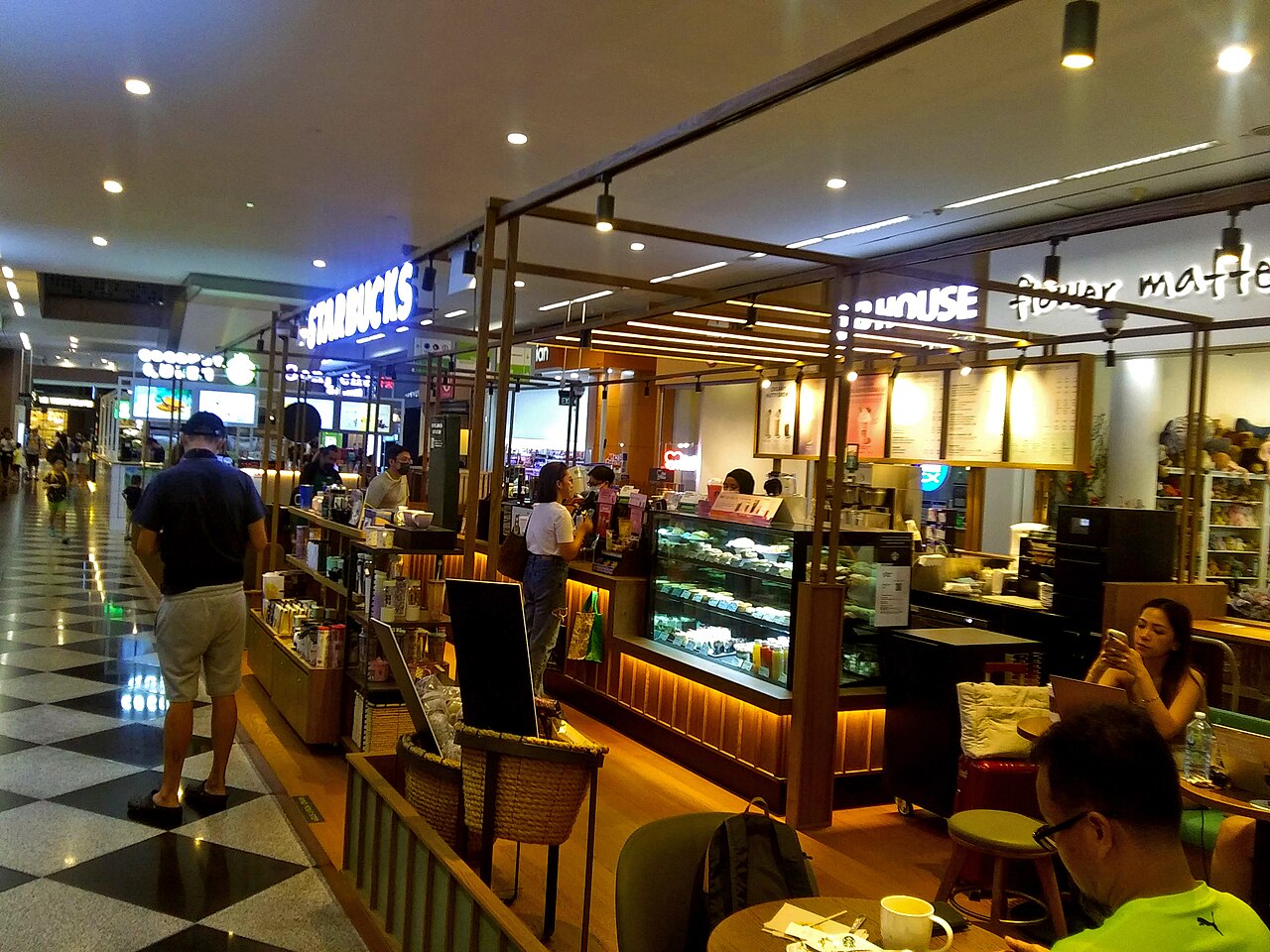

DFI Retail Group has agreed a conditional reorganisation that would move the Starbucks licensed business operated through Maxim’s under DFI’s direct control. The network spans more than 1,100 coffeehouses across seven Asian markets. The transaction is commercially significant because it combines operating control, regional scale and capital recycling in one restructuring.
What the transaction actually does
DFI announced the conditional sale and purchase agreement on 30 September 2026. DFI currently holds an indirect 50% interest in Maxim’s Caterers. Under the proposed reorganisation, DFI would assume Maxim’s interests in the Starbucks licensed business covering Thailand, Hong Kong, Singapore, Vietnam, Cambodia, Macau and Laos.
In exchange, Maxim’s would buy back the shares in Maxim’s currently owned by DFI. Consideration would comprise the transfer of the entire equity interest in the Starbucks licensed business plus approximately US$340 million in cash, subject to customary completion adjustments.
This is not yet a completed transfer. Closing depends on third-party consents, antitrust clearances and the internal separation of the Starbucks business from Maxim’s other operations. DFI expects completion by the end of March 2027; the agreement contains later deadline mechanics if conditions are not satisfied or waived.
Why direct control matters
The strategic shift is from holding an interest through an associate to controlling a regional licensed operating platform. Direct control can shorten decisions on store investment, procurement, digital systems, loyalty, property and organisational design. It also makes operating performance more visible in DFI’s consolidated results.
That control carries responsibility. A licensed network of this scale must balance Starbucks’ brand standards with seven different property markets, labour pools, consumer preferences and regulatory environments. Centralising procurement and technology may produce efficiencies, but store-level execution remains local.
The numbers reveal the operating thesis
DFI reported that the Starbucks licensed business generated close to US$750 million in revenue in 2025, with a 7.0% underlying operating margin. Revenue grew at a 3.5% compound annual rate from 2023 to 2025.
Management expects the business to contribute US$600–650 million to DFI subsidiary revenue from April through December 2027 and approximately US$900 million for the full year in 2028. It is targeting 6–7% annual revenue growth from 2026 to 2029, a mid-term operating margin of 8–9%, and at least 1,350 coffeehouses. DFI also estimates US$10 million of operating synergies in the first full year after consolidation.
These figures are company targets, not guaranteed outcomes. Reaching them would require both footprint expansion and stronger sales density, while protecting brand experience and capital returns. The planned rise from more than 1,100 to at least 1,350 stores implies that site quality and market sequencing will be as important as the total opening count.
Capital recycling changes the risk profile
DFI describes the transaction as immediately cash-positive because it expects to receive approximately US$340 million while assuming control of the licensed business. The company says the Starbucks platform should self-fund its growth capital needs, leaving the cash receipt available for other investments or shareholder returns.
This structure is more nuanced than a conventional cash acquisition. DFI is exchanging a 50% interest in a broad restaurant group for full control of a more focused licensed retail platform, plus cash representing the valuation difference. The commercial judgement is therefore about portfolio concentration: whether the Starbucks business offers better strategic control, growth visibility and returns than continued participation in the wider Maxim’s portfolio.
What operators and brand owners should learn
- Governance affects growth speed: ownership structures that worked during market-building can become slower once a licensed network reaches regional scale.
- Control must be matched by capability: consolidation only creates value if management can integrate procurement, property, data and talent without weakening local responsiveness.
- Footprint targets need market-level gates: a regional opening target should be broken into site economics, payback thresholds and capacity by country.
- Licensing is an operating model, not passive rent: large licensed businesses require continuous investment in standards, training, digital systems and customer experience.
- Synergies should be measurable: procurement, overhead and real-estate savings need owners, timelines and verification against one-off integration costs.
The key diligence questions
- Which consents and antitrust approvals are required in each market?
- How will the Starbucks business be separated from shared Maxim’s systems, contracts and teams?
- Which markets can absorb the largest share of the proposed 250-plus net additions?
- How much capital is required per opening, and what payback threshold will govern rollout?
- How will DFI protect local menu relevance while standardising procurement and digital infrastructure?
- What portion of the targeted margin improvement comes from sales growth versus cost savings?
A regional platform, but execution remains local
The proposed reorganisation would give DFI a rare regional licensed platform with scale, recognised consumer demand and published growth targets. Its value will not be proved by completion alone. The decisive evidence will be disciplined openings, improving store productivity, realised synergies and consistent brand standards across seven distinct markets.
Star Brands Consulting Group supports brand owners, investors and qualified operators evaluating licensed market-entry structures, partner capability and territory readiness. Learn more about our Market Entry Advisory.
Leave a Reply