
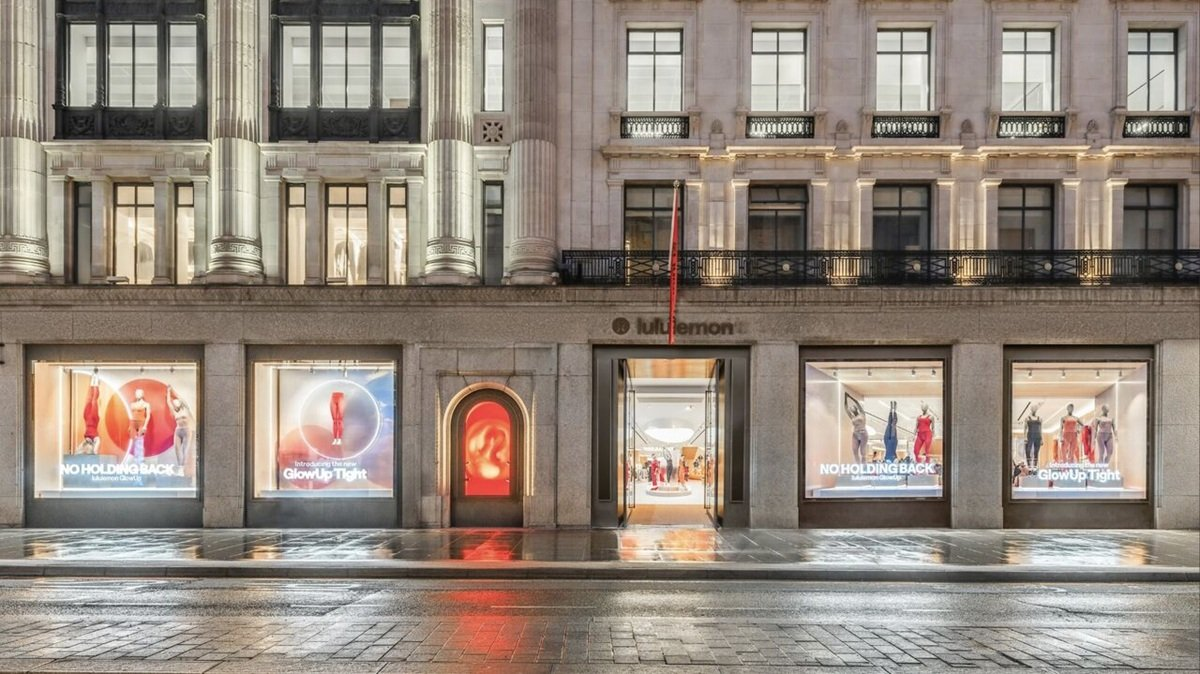
For years, many observers viewed Lululemon as a North American success story.
Today, it is becoming something much bigger.
Over the past few months, the Canadian athleisure giant has quietly revealed a series of expansion moves that provide a fascinating look into how modern premium brands enter new markets.
First came Greece.
Then Mexico.
And behind both announcements is a broader strategy that investors, retailers, and brand owners should be paying close attention to.
Lululemon Has Arrived in Greece
In May 2026, Lululemon opened its first stores in Greece, marking the brand’s official entry into the country. The first location opened in Kolonaki, one of Athens’ most prestigious retail districts, with a second location scheduled for Golden Hall shopping centre. The expansion is being executed through a franchise partnership with Arion Retail Group.
On the surface, two stores may not sound significant.
Strategically, however, they tell a different story.
Lululemon did not enter Greece through a large company-owned rollout.
Instead, it partnered with a regional operator that already understands local real estate, consumer behaviour, operations, and market dynamics.
That reduces risk.
It accelerates market entry.
And it allows the brand to focus on what it does best: building demand and maintaining brand integrity.
Mexico Is Following a Different Path
While Greece is being developed through a franchise partnership, Mexico represents another stage of Lululemon’s international growth journey.
The company recently announced plans to open eight additional stores in Mexico during fiscal 2026, bringing its store count in the country to more than thirty locations by year-end. At the same time, it launched a dedicated Mexican e-commerce platform to strengthen its local presence.
Unlike Greece, Mexico is no longer a market-entry story.
It is now a market-scaling story.
Lululemon has already established brand awareness, proven demand, and operational capability.
The focus has shifted from entering the market to expanding market share.
This Is Bigger Than Greece and Mexico
The most interesting part of these announcements is not the store openings themselves.
It is what they reveal about Lululemon’s broader international strategy.
The company has announced plans to enter six new markets in 2026, including Greece, Austria, Poland, Hungary, Romania, and India, using a combination of franchise partnerships and strategic market-entry structures.
This is not random expansion.
It is highly structured.
And it reflects a growing trend among premium consumer brands.
The Old Expansion Model vs The New Expansion Model
Historically, many retailers approached international growth the same way:
- Build infrastructure
- Hire local teams
- Open company-owned stores
- Scale gradually
That approach still works.
But it is expensive.
And it is slow.
Lululemon appears to be taking a more flexible route.
Depending on the market, the company can choose:
- Company-owned stores
- Franchise partnerships
- Strategic operators
- Local e-commerce infrastructure
The objective remains the same.
The route changes depending on the market.
That is smart expansion.
Why Greece Matters More Than It Appears
Many global brands focus almost exclusively on major markets.
The United States.
China.
Germany.
Japan.
The decision to enter Greece is interesting because it demonstrates confidence in smaller but strategically important markets.
Athens has become increasingly attractive to premium retail brands.
Luxury retailers, lifestyle brands, and international fashion groups have all increased investment in the city over recent years.
Lululemon’s arrival signals that management believes the market has matured enough to support premium athleisure at scale.
The Real Lesson for Brand Owners
The biggest takeaway from Lululemon’s recent moves is not that the company is opening stores.
It is how those stores are being opened.
Many founders assume expansion requires choosing a single path:
Franchise.
Licensing.
Company-owned.
Distribution.
The reality is often far more dynamic.
The strongest brands increasingly use multiple structures simultaneously.
Different markets require different solutions.
Different stages of growth require different levels of control.
The question is no longer:
What is the expansion model?
The better question is:
What is the right expansion model for this market?
The Star Brands Perspective
At Star Brands Consulting Group, one of the most common mistakes we see is businesses trying to force the same expansion strategy into every market.
Successful international growth rarely works that way.
Market entry in Greece may require a different structure than market entry in India.
Expansion in Mexico may require a different approach than expansion in Southeast Asia.
The brands that understand this tend to scale faster, deploy capital more efficiently, and reduce execution risk.
Lululemon’s recent moves offer a strong example of that principle in action.
Final Thoughts
Greece and Mexico may appear to be separate expansion stories.
In reality, they are part of the same strategy.
Lululemon is not simply opening stores.
It is building an international growth platform.
Through franchise partnerships, local operators, e-commerce infrastructure, and carefully selected markets, the company is demonstrating how premium brands can expand globally without sacrificing control.
For investors, founders, and operators, the lesson is straightforward:
The future of expansion is not about opening more stores.
It is about entering the right markets with the right structure.
Leave a Reply