
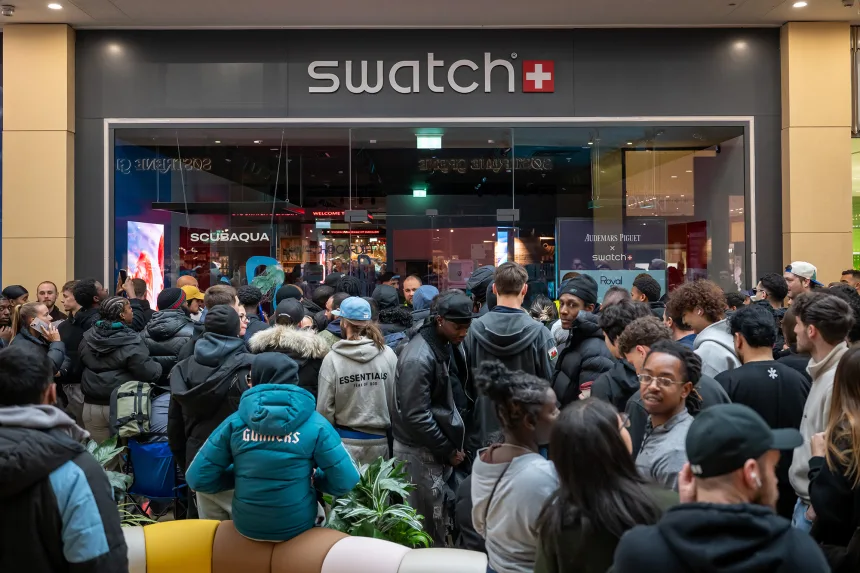
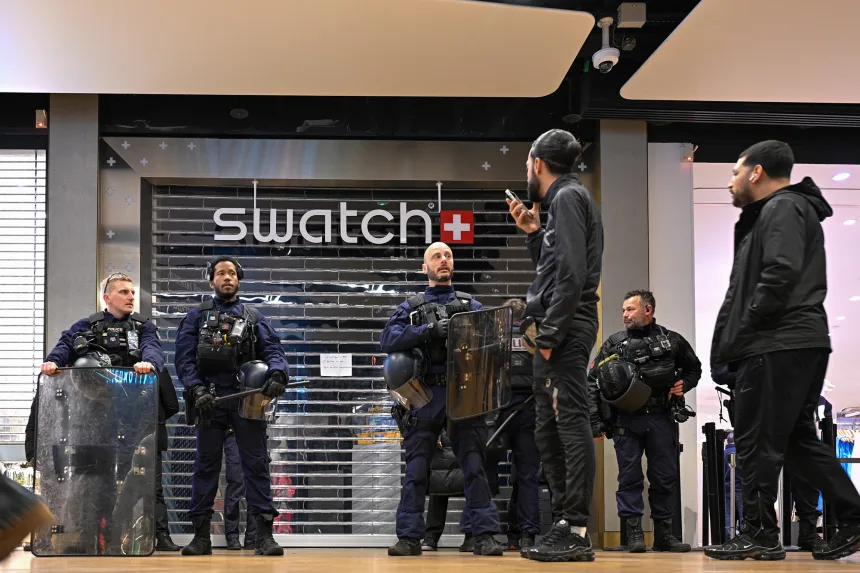
What was supposed to be a high-profile luxury watch collaboration quickly escalated into one of the most chaotic retail events of 2026.
Across Europe and parts of the United States, the launch of the Swatch x Audemars Piguet “Royal Pop” collection reportedly triggered enormous queues, crowd-control incidents, temporary store shutdowns, police intervention, resale frenzy, and viral internet attention — reinforcing just how powerful modern hype-driven consumer culture has become. (retaildetail.eu)
For luxury brands, retail operators, investors, and consumer strategists, the Royal Pop phenomenon offers a major case study in how modern luxury commerce is evolving far beyond traditional product launches.
A Luxury Launch That Turned Into A Global Retail Frenzy
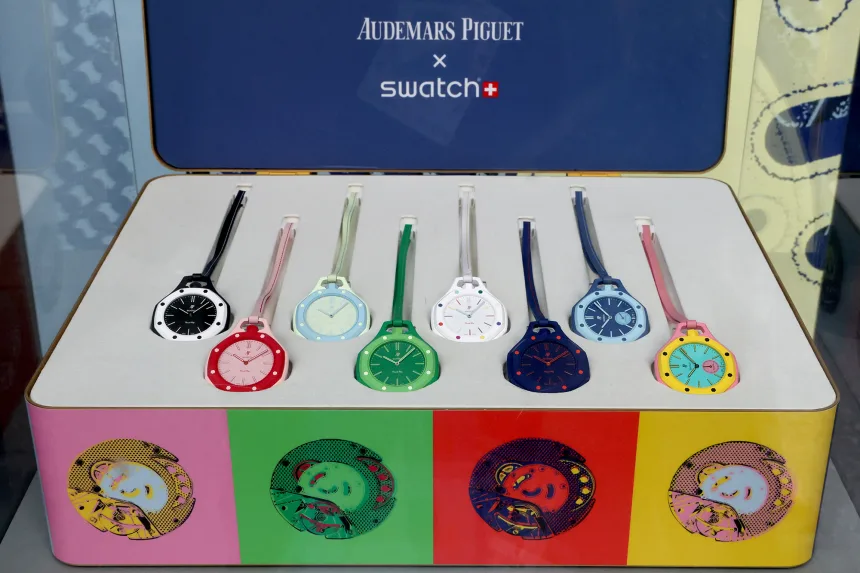
The collaboration merges Swatch’s mass-market accessibility with the iconic design identity of Audemars Piguet’s legendary Royal Oak.
Unlike traditional Royal Oak models — which can cost tens or even hundreds of thousands of dollars — Royal Pop pieces launched around the $400 range, dramatically expanding access to one of luxury watchmaking’s most recognizable design languages. (reuters.com)
But the real story became the reaction.
Reports across Europe described:
- extremely long queues
- overnight camping
- aggressive crowd surges
- store closures
- police deployment
- resale speculation
- widespread social media frenzy
In Paris, some reports even described tear gas deployment after crowd tensions escalated during launch-day chaos. (retaildetail.eu)
The scale of the reaction demonstrates how luxury launches increasingly behave more like:
- sneaker drops
- entertainment events
- internet spectacles
- collectible-culture moments
- status-signaling rituals
rather than traditional retail transactions.
When Luxury Drops Become Crowd-Control Events
One of the most important strategic insights from the Royal Pop launch is this:
Modern luxury launches are increasingly functioning as engineered cultural events.
Today’s consumer demand cycles are heavily influenced by:
- scarcity psychology
- social media virality
- identity signaling
- resale economics
- online hype ecosystems
- influencer amplification
- fear of missing out (FOMO)
The product itself is no longer the only thing being sold.
Consumers are increasingly buying:
- participation
- internet relevance
- cultural visibility
- collectible status
- emotional experience
That shift changes the economics of luxury marketing entirely.
The launch chaos also demonstrates how “hype commerce” can sometimes overwhelm traditional retail infrastructure when demand becomes amplified through digital communities at global scale.
Scarcity Is Now Part Of The Product
An increasingly important reality in modern luxury is that scarcity itself has become a commercial strategy.
Swatch had already experienced major global frenzy through previous collaborations such as MoonSwatch and Blancpain x Swatch.
Because of that history, many analysts argued that the scale of the Royal Pop launch reaction was highly predictable. (wired.com)
That matters because modern launches are increasingly designed around:
- anticipation cycles
- social speculation
- queue visibility
- online conversation
- resale expectation
- artificial scarcity perception
In many cases, the virality itself becomes more commercially valuable than the product’s utility.
Why The Collaboration Matters Beyond Watches
The Royal Pop collaboration is significant because it signals a broader shift happening across premium consumer industries.
Luxury brands are increasingly experimenting with:
- broader cultural accessibility
- collaboration-driven visibility
- younger consumer engagement
- internet-native marketing psychology
- collectible ecosystems
- experiential commerce design
Even brands traditionally associated with extreme exclusivity are recognizing the commercial power of mass cultural relevance.
For Audemars Piguet — a historically highly exclusive luxury watchmaker — the collaboration represented a major strategic expansion into broader consumer attention territory. (hodinkee.com)
That alone makes the launch commercially important.
The Secondary Market Is Fueling The Attention
As with many hype-driven launches, resale culture rapidly became part of the story.
Reports indicated some Royal Pop products appeared online almost immediately for several multiples above retail pricing. (reuters.com)
This reinforces another modern retail reality:
Secondary markets now actively influence primary-market consumer behavior.
The possibility of resale profit increases:
- urgency
- queue participation
- online visibility
- perceived exclusivity
- social validation
which further accelerates consumer frenzy.
The Bigger Strategic Lesson For Brands
The Royal Pop launch demonstrates several important trends shaping modern luxury and retail:
1. Culture Is Becoming More Valuable Than Traditional Advertising
The collaboration generated enormous global visibility through:
- TikTok
- YouTube
- watch communities
- fashion media
- resale discussions
- mainstream international press
That level of organic attention is extremely difficult to replicate through conventional advertising alone.
2. Accessibility & Exclusivity Are Now Being Blended Together
Luxury brands increasingly want:
- mass cultural relevance
- viral visibility
- younger audience exposure
- high resale desirability
while still preserving premium brand prestige.
The challenge is balancing visibility without damaging long-term exclusivity.
3. Retail Is Becoming Experience-Led Entertainment
The launch itself became the product experience.
The queues, crowd reactions, internet conversations, resale speculation, and social media visibility became part of what consumers were buying emotionally.
Modern luxury retail increasingly overlaps with:
- live entertainment
- social identity
- internet culture
- fandom psychology
- collectible ecosystems
Strategic Brand Intelligence Matters More Than Ever
For luxury brands, retail operators, investors, and consumer businesses, launches like Royal Pop highlight how rapidly global consumer behavior is evolving.
Success increasingly depends on understanding:
- cultural intelligence
- scarcity economics
- hype-commerce psychology
- digital community behavior
- viral positioning
- experiential retail strategy
- consumer identity signaling
At Star Brands Consulting Group, we help brands, operators, and investors evaluate growth, positioning, licensing, market-entry, and consumer expansion opportunities through strategic intelligence and advisory systems.
Leave a Reply