
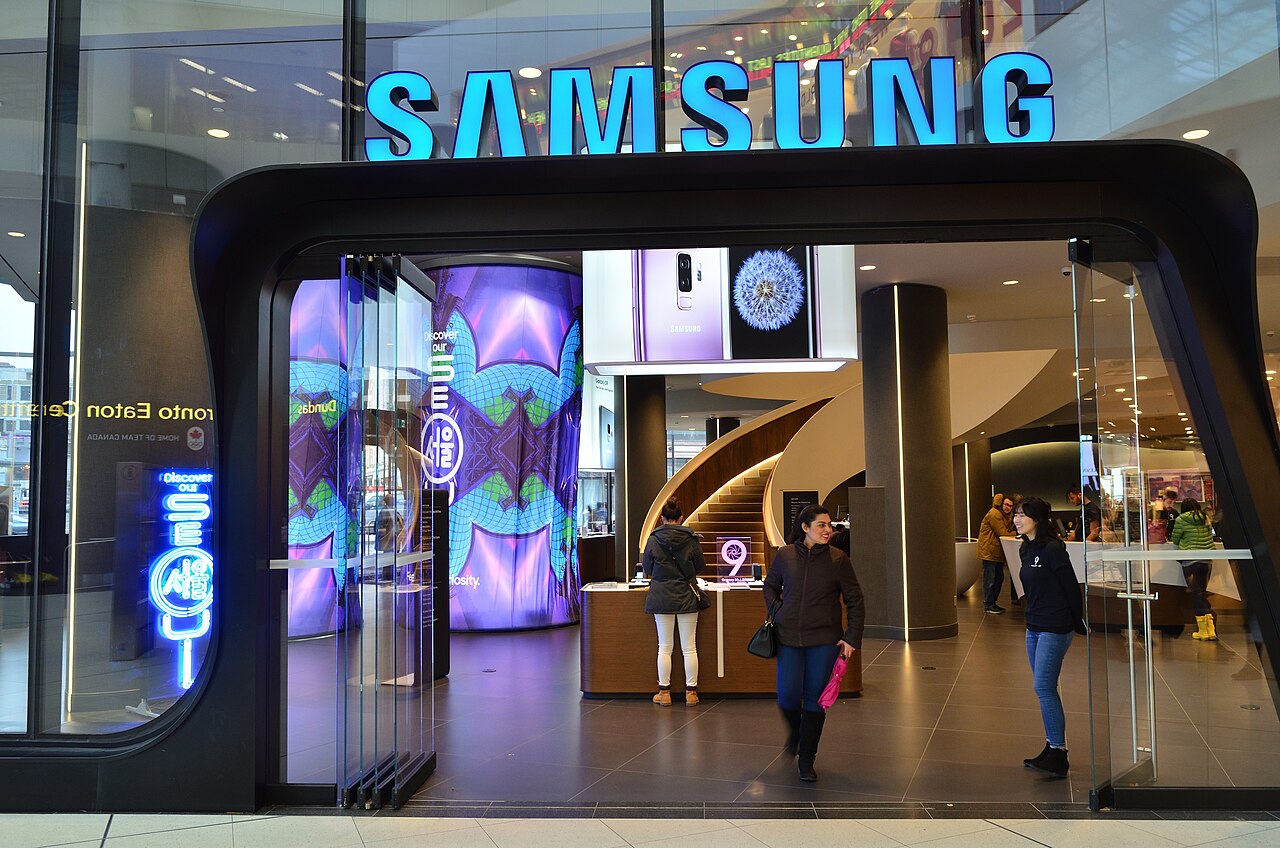

Samsung offers several distinct routes into branded electronics retail and technology sales. A store operator, distributor, dealer and enterprise solutions partner perform different jobs and require different permissions. The strongest investor proposal selects one commercial model, identifies the customer and funds the operating capability behind it.
Updated 7 October 2026.
Samsung’s scale and a verified retail-partner example
Samsung Electronics’ FY2025 results, announced on 29 January 2026, reported KRW333.6 trillion in revenue and KRW43.6 trillion in operating profit. Those consolidated figures include businesses beyond consumer retail and cannot be used as dealer-margin or store-return estimates.
There is direct evidence of third-party branded-store operation. Samsung’s UK Experience Store information identifies Partner Retail Services Limited as the independent operator of those stores, while distinguishing Samsung’s direct channels. This is a documented partner model, not an announcement of available UK store franchises.
Choose the Samsung business you intend to operate
| Model | Primary commercial role | Main investment focus |
|---|---|---|
| Branded retail or experience store | Consumer sales and product demonstration under approved terms | Premises, fit-out, stock, staff and customer experience |
| Authorised dealer or reseller | Sell approved product lines to an agreed customer base | Inventory, sales capability and after-sales arrangements |
| Distributor | Supply and support a downstream sales network | Warehousing, logistics, credit and channel management |
| Enterprise solutions partner | Deliver devices or technology solutions to organisations | Technical capability, project delivery and account development |
Samsung’s U.S. business information describes partner programmes across different technology categories. Programme names and eligibility are regional; a mobile appointment should not be assumed to include appliances, displays, service work or every other product line.
Samsung franchise cost: why the model matters
The cited sources do not provide a single worldwide Samsung franchise fee or minimum investment. A distributor’s capital requirement is fundamentally different from a retail store’s, and an enterprise integrator has different costs again.
For a store, price the premises, fit-out, demonstration units, opening stock, systems, security and recruitment. For distribution, model stock depth, warehousing, delivery, credit extended to dealers and supplier-payment obligations. For enterprise projects, fund technical staff, demonstration capability, implementation and the period before customer payment.
The financial plan must use the actual commercial terms for the target category and territory. It should show product margins, rebates where contractually supported, warranty responsibilities and the treatment of returned or ageing inventory.
The operating economics to test
Product mix: smartphones, accessories, appliances and displays have different sales cycles, stock requirements and fulfilment costs. Build a separate contribution model for each proposed category.
Inventory and price changes: new product launches can change the value of existing stock. Establish ordering discipline, ageing-stock controls and any contractual price-protection arrangements before relying on them in the forecast.
After-sales service: identify who handles faults, installation, warranty claims and customer returns. Selling a product does not automatically confer repair authorisation.
Cash conversion: track the time between paying for stock and collecting customer cash. A growing dealer or distribution business can require more working capital even when reported sales are rising.
These are Star Brands’ commercial assessment priorities. They provide the basis for comparing different Samsung-related business models on their actual economics.
Prepare an operator dossier that fits the channel
The proposal should identify the legal entity, owners, funding source, management team and relevant trading history. Add the proposed territory, product categories, customer segments and sales channels.
A distributor should demonstrate dealer reach and credit-control capability. A store operator should provide suitable sites and retail performance evidence. An enterprise partner should show technical competence and access to business customers. The application becomes stronger when the evidence matches the appointment being sought.
Develop your Samsung investment case
Star Brands Consulting Group supports channel selection, market feasibility, capital planning and partner preparation. We help investors define the commercial route and explore the appropriate regional and industry relationships.
Submit your target country, product categories, capital range and operating background. Include your store locations, dealer network or enterprise customer base, as applicable. Any Samsung appointment, territory right or branding permission must be confirmed by the authorised counterparty.
Leave a Reply