
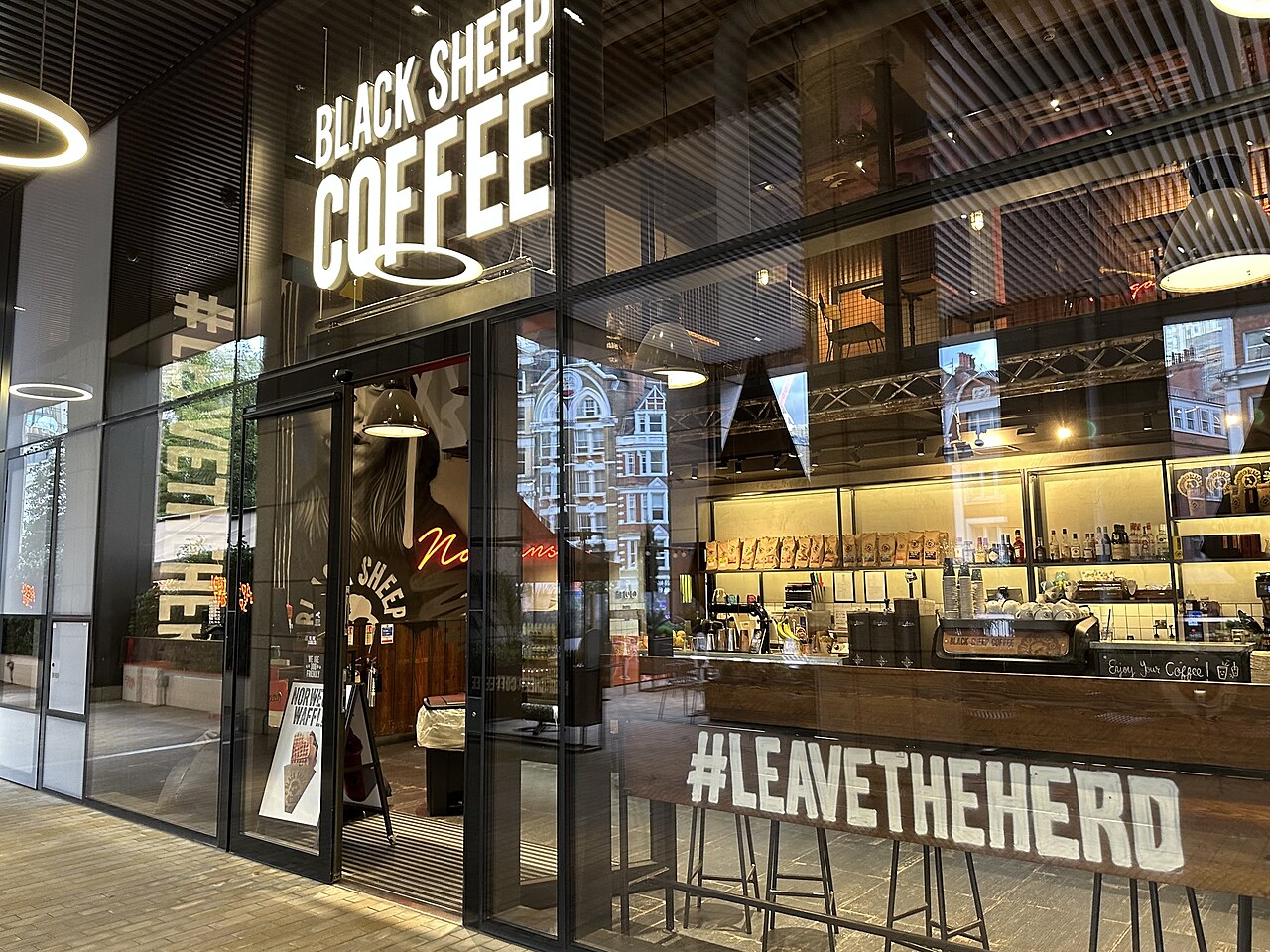

A reported agreement for at least 20 stores across northern England and southern Scotland extends an existing franchise relationship. Its commercial significance lies in whether operating experience can be converted into a disciplined, multi-format development programme.
What has been reported
Hospitality & Catering News reported on 29 October 2026 that Black Sheep Coffee had signed a franchise development agreement with Glasgow-based SUR Group for a minimum of 20 stores. The territory includes West Yorkshire, Northumberland, Cumbria and Dumfries and Galloway. The report identifies high streets, retail parks and drive-thru developments as potential formats and locations.
The same report attributes an expectation of approximately 300 jobs over five years to the expansion. That is a forward-looking estimate, not employment already created. The coverage dates establish when the deal became public; the precise signing date was not supplied.
World Coffee Portal’s 29 October report also describes the agreement and says SUR joined the franchise network in May 2024, opened its first Glasgow store in January 2026 and currently operates six stores in Glasgow and one in Ayr. These are reported operating credentials, not independently audited evidence of profitability.
The brand’s qualification threshold is a separate fact
Black Sheep Coffee’s official UK franchising page, checked on 31 October, seeks experienced multi-unit or multi-brand operators. It publishes a minimum commitment of 10-plus locations and £1 million in cash or liquid assets, and lists high-street, transport-hub, retail-park, shopping-centre and drive-thru formats.
Those are general recruitment criteria. They do not disclose SUR’s negotiated terms, establish the investment required for this agreement, or demonstrate that £1 million would fund a 20-store rollout. The reviewed coverage does not disclose franchise fees, royalties, total capital expenditure, individual site approvals or store-level returns.
Analysis: operating stores and delivering a territory require different capabilities
The following is Star Brands Consulting Group’s commercial analysis. An existing operator can bring trained managers, supplier familiarity and knowledge of the brand’s service standards. A larger territory also creates new demands: finding premises, managing several fit-outs, recruiting ahead of openings and maintaining standards across a wider travel radius.
Investors should therefore distinguish the existing estate’s trading performance from the resources required for expansion. A useful diligence pack would show cash generation after maintenance spending, management depth, committed funding and a site-by-site opening schedule. A signed development target alone answers none of those questions.
Format choice should follow location economics
A commuter high-street shop and a drive-thru serve different customer journeys. Footfall counts need to be translated into likely transactions by time of day; vehicle access, queue space and service speed matter differently from pedestrian visibility and nearby office demand. Property costs, staffing and equipment requirements should be modelled for each proposed format.
For landlords, the relevant evidence is an operator’s funded delivery plan and suitability for the specific premises. For brand owners, a phased rollout can create checkpoints for opening quality, staffing and customer retention before the next cluster is committed. For operators, geographic expansion should be matched by a credible area-management structure.
What to watch next
Named sites, approved formats, opening dates and evidence of recruitment will make the programme more measurable. Until those details emerge, the agreement should be assessed as a development commitment rather than an operating estate. Nothing in the reviewed sources establishes that the announced territories are available to other applicants.
For independent support assessing operator readiness, territory strategy or a proposed franchise rollout, contact Star Brands Consulting Group.
Leave a Reply