
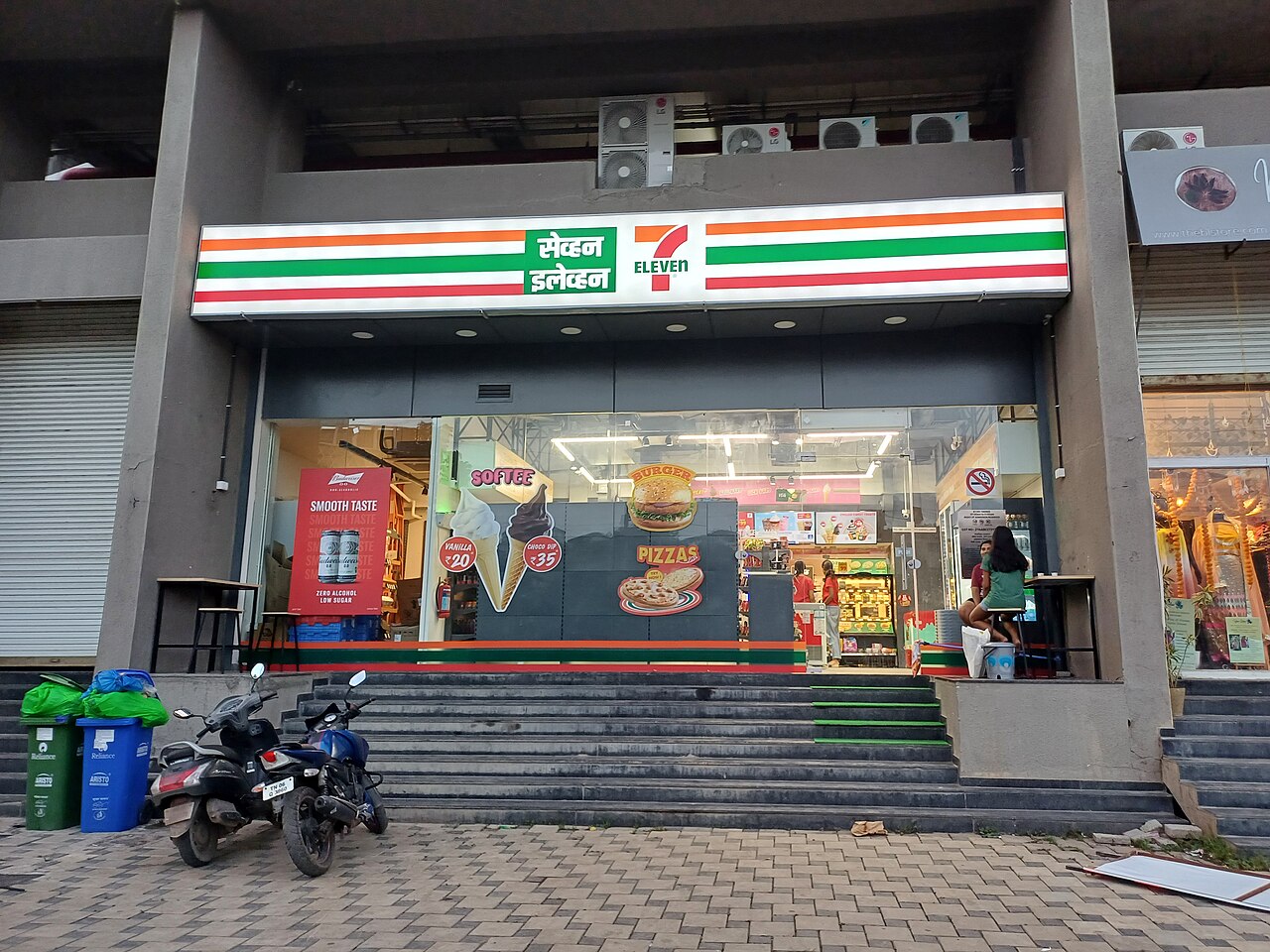

Reliance’s latest results put a ₹108 crore impairment against its 7-Eleven business. For international brands and local operators, the disclosure makes the financial consequences of market exit more concrete—and strengthens the case for testing a format before committing to a wider rollout.
The new disclosure follows the store closures
Reliance Industries’ 30 October 2026 results presentation, covering the quarter ended 30 September, identifies a one-time ₹108 crore impairment associated with 7-Eleven. That is ₹1.08 billion, expressed in another unit of the same currency.
The closure itself predates this earnings disclosure. In an 8 October report, C-Store Dive cited a Seven & i spokesperson confirming that Reliance had closed its remaining 31 Indian stores by the end of September. The spokesperson also said the group retained a long-term aspiration to serve customers in India. That aspiration is not an announced reopening agreement.
A strong partner does not settle the format question
In its 7 October 2021 launch announcement, 7-Eleven identified Reliance Retail Ventures’ subsidiary, 7-India Convenience Retail, as the master-franchise vehicle. The first Mumbai store was scheduled for 9 October. The announcement envisaged locally developed fresh-food recipes and support from 7-Eleven to adapt its operating model.
Our analysis: access to an established local operator can provide a route into a market, but the investment case still depends on customers repeatedly choosing the specific format. A recognised brand, procurement infrastructure and access to property do not by themselves establish the sales mix, visit frequency or operating contribution needed at each location.
The public disclosures reviewed do not isolate why individual stores failed to meet expectations. They do not justify attributing the exit solely to quick commerce, rents, assortment or any other single factor.
Read the impairment without overstating it
The ₹108 crore figure is an accounting charge identified in the presentation. It should not be presented as the full cash cost of the venture, its cumulative operating losses or the complete cost of closing the network. The cited disclosure does not provide that reconciliation or a store-by-store breakdown.
For context, Reliance reported retail EBITDA of ₹6,228 crore before the charge and ₹6,120 crore after it. The presentation attributes wider margin pressure to digital-commerce investment, absorbed input-cost inflation and the festive calendar. It would therefore be misleading to explain the retail segment’s overall earnings movement through 7-Eleven alone.
What brand owners and operators should test
The commercial lesson is to make expansion commitments conditional on evidence from the first operating cohort. Three questions deserve attention before capital is committed:
- Can the format earn repeat visits? Test local purchase occasions, basket composition and contribution after occupancy, staffing, shrinkage and fresh-food waste. Initial launch traffic is an incomplete basis for expansion.
- What evidence releases the next tranche of capital? Agree measurable operating milestones, a review period and responsibility for corrective work before adding locations. A development target should be supported by an operating case.
- What remains recoverable if the format changes? Assess equipment reuse, inventory disposal, property commitments and the practical work of debranding. Treat exit planning as part of investment design.
These are analytical implications of the case, not disclosed terms of the Reliance–7-Eleven agreement. The available sources establish an entry model, a subsequent network closure and a newly reported impairment; they do not establish that franchise rights are currently available.
For a structured review of market-entry options, operator readiness and rollout assumptions, contact Star Brands Consulting Group.
Leave a Reply