
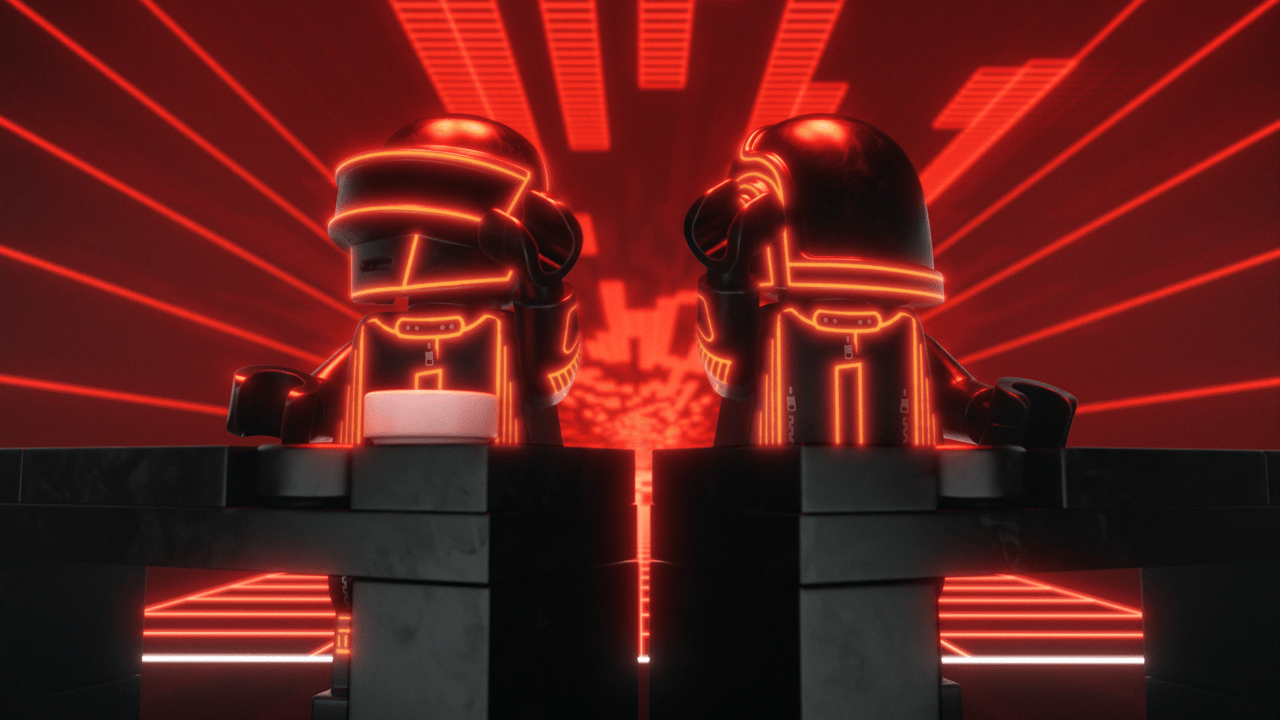
LEGO’s partnership with Daft Punk shows how a recognisable creative identity can support products, content and experiences within one collaboration. For brand owners, the useful question is how to convert demonstrated fan interest into a commercially workable programme.
What has been announced
The companies announced the partnership on 22 October 2026. A Daft Punk Concert submission on LEGO Ideas has been approved to enter development as a set inspired by the pyramid stage from the duo’s 2007 Alive tour.
The father-and-son project won a LEGO Ideas music challenge in 2020 and subsequently attracted 10,000 supporters. The announcement also introduces a promotional film and describes plans spanning products, content and brand experiences, with more to come in 2027.
It does not disclose royalties, exclusivity, contract duration, product pricing or a firm retail release date. The fan model shown in the announcement is explicitly not the final product. Approval to develop it should therefore be distinguished from a finished range available to order.
Fan support is evidence, but not a sales forecast
Star Brands analysis: a community-backed concept gives a prospective partner more to evaluate than broad claims of brand awareness. It indicates that a specific interpretation of the property has attracted active support. That can help focus design work and explain why a proposed product fits the audience.
However, voting for an idea requires a different commitment from buying a product. Commercial assessment still needs to consider price sensitivity, likely purchase occasions, geographic demand, competing products and the cost of reaching customers outside the original fan community.
Operators should keep these measures separate. Supporter totals describe participation; paid orders, repeat purchases and margin after fulfilment describe commercial performance. Treating the first as a substitute for the second can lead to excessive inventory commitments.
Build the rights and approval process around each use
A programme that combines physical products, moving images and live experiences places different demands on the partners. The relevant commercial scope may include character appearance, visual assets, music, packaging, promotional materials and event formats.
For other brand owners considering a similar collaboration, the practical step is to map each planned use before committing a launch budget. Teams need clarity on which assets they can use, who approves changes, how long approvals take and which party bears the cost of revisions. These are planning considerations, not disclosed terms of the LEGO–Daft Punk agreement.
Partner selection should follow that operating map. Manufacturing ability alone may be insufficient when the programme also relies on content production and coordinated audience engagement. Conversely, a successful campaign does not demonstrate that a partner can deliver compliant products on time.
Stage investment around confirmed milestones
Retailers and potential collaborators can use an announcement to begin evaluating audience fit. Firm buying plans require more: an approved product, confirmed supply terms, delivery timing and a clear route to market.
A staged approach can link spending to evidence. Early work can test the proposition and develop samples; larger inventory or event commitments can follow once specifications, approvals and distribution arrangements are settled. This reduces the gap between an appealing brand story and the obligations needed to deliver it.
The broader commercial lesson is that fan creativity can inform product development without removing execution risk. A strong partnership gives that creativity a route through design, rights management, production and distribution—and measures results at each stage.
Star Brands Consulting Group supports licensing strategy and partner evaluation. Contact our team to discuss a brand collaboration or market-entry plan.
Leave a Reply