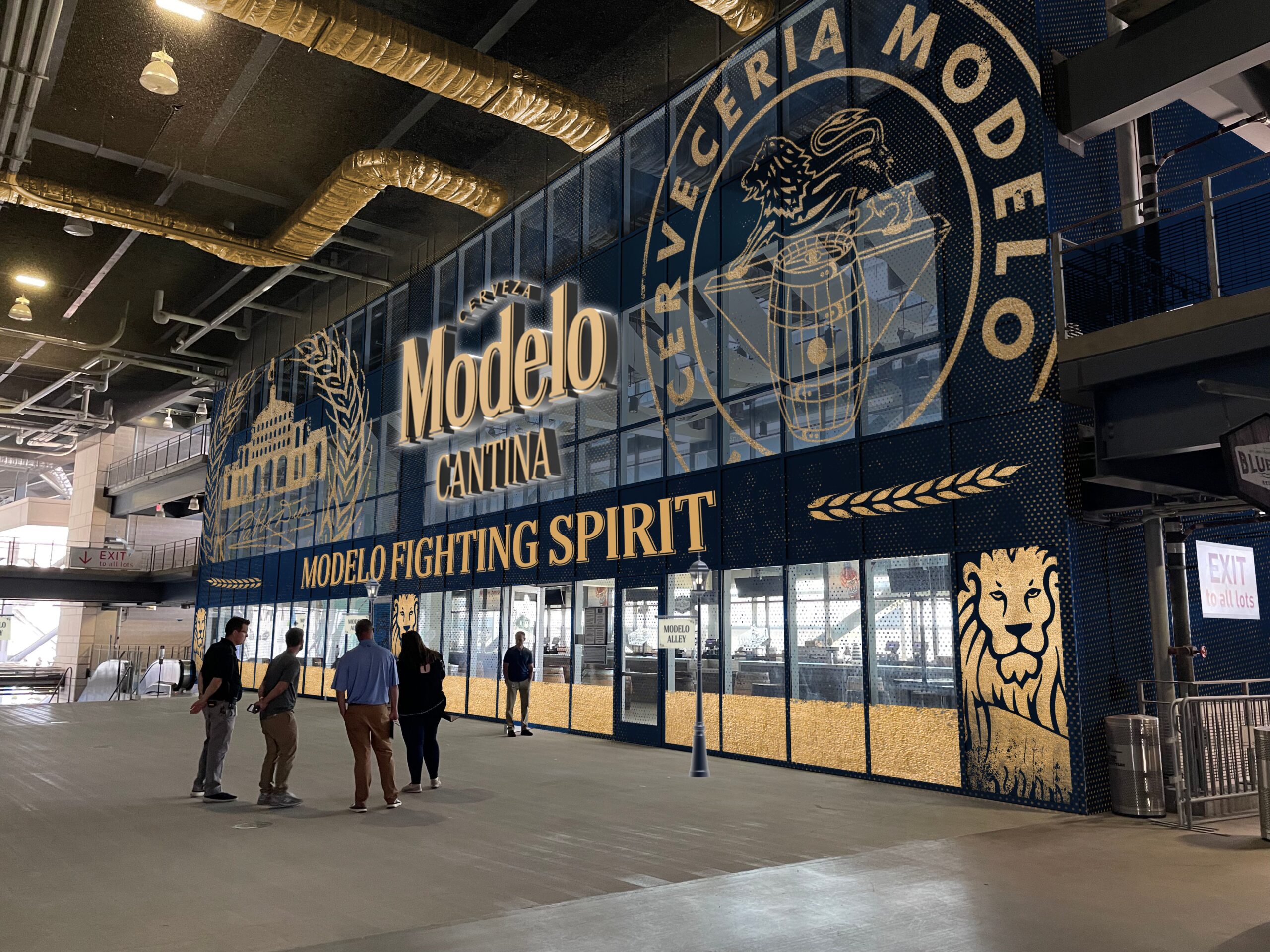
MetLife Stadium, the New York Giants and the New York Jets have extended their long-term partnership with Corona and Modelo. The commercial significance lies less in the “official beer” label than in the connected rights package: branded hospitality, venue retail, regional packaging and off-site activation.
The parties announced the extension on 20 October 2026. They did not disclose its duration, value, volume commitments or performance obligations, so none should be inferred.
What the extension actually adds
Corona and Modelo will remain the “Official Cervezas” of MetLife Stadium, the Giants and the Jets. The renewed arrangement includes a new title sponsorship for the Beer Garden in the stadium’s Tailgate Zone, with entertainment and fan activations before games.
The package also continues and expands several existing assets:
- the Modelo Cantina and other branded destination spaces inside the stadium;
- branding across kiosks and walk-up bars on the 100 and 300 levels;
- premium-hospitality activity and year-round venue messaging;
- retail and packaging rights across the New York–New Jersey marketplace; and
- annual team-themed events at participating bars in the Tri-State market.
The last two points matter commercially. They extend the partnership beyond a single venue and connect team intellectual property with regional retail and on-premise activation.
From media rights to a route-to-market system
When the relationship began in 2021, Constellation Brands described a 42,500-square-foot Corona Beach Club, a 3,100-square-foot Modelo Cantina, in-venue mobile ordering and rights to use the teams’ marks on and off premise in the New York market.
The 2026 extension keeps the physical destinations but layers in a wider retail and event programme. That suggests a rights architecture with three linked stages:
- Experience: branded spaces make the sponsorship tangible inside the venue.
- Conversion: kiosks, bars and hospitality create points of purchase, not just impressions.
- Extension: packaging rights and participating-bar events carry the association into the surrounding market.
This is an editorial inference from the disclosed rights, not a claim about sales results. The announcement provides no revenue, return-on-investment or volume data.
Why the licensing structure matters
Constellation’s 2026 annual report says the company holds an exclusive perpetual licence to produce, import, market and sell its Mexican beer portfolio in the United States. It also identifies event sponsorship and on-premise activation as parts of its marketing toolkit.
The MetLife arrangement therefore sits inside a broader licensed-brand system. Stadium and team rights can strengthen the brands’ U.S. marketing, but they do not replace the operating chain required to realise value: production, importation, distribution, venue concessions, retail execution and responsible alcohol marketing all still have to work together.
For brand owners, this is the useful distinction between buying visibility and building an executable commercial platform. A valuable rights package gives operators specific places, channels and occasions in which to activate the brand.
What commercial partners should test
Investors, licensors, venue owners and activation partners assessing a comparable agreement should look beyond headline status and examine the operating detail.
- Category definition and exclusivity: determine which beer, non-alcoholic, ready-to-drink and adjacent products are included or excluded.
- Geographic rights: define exactly where team marks may appear on packaging, retail displays and trade programmes.
- Inventory and service: clarify product availability, pour rights, concession responsibilities and service standards across event types.
- Activation obligations: allocate the cost, staffing, production and approval process for hospitality spaces and off-site events.
- Measurement: agree reporting for hospitality use, retail execution, point-of-sale performance and activation reach without treating impressions as sales.
- Asset ownership: specify who funds, maintains and ultimately owns branded fixtures when the agreement expires.
- Compliance: build age-gating, responsible-marketing controls and local alcohol rules into every venue, packaging and retail activation.
The wider commercial lesson
The extension shows how sponsorship, licensing, hospitality and distribution can be designed as one system. The strongest commercial asset is not a logo placement in isolation; it is a coordinated set of rights that moves a consumer from branded experience to purchase occasion and then into the wider market.
That model is transferable well beyond sport. Retail landlords, hotel groups, entertainment venues and licensed consumer brands can apply the same discipline: define the physical experience, connect it to a transaction, extend it through local channels and measure each layer separately.
Star Brands Consulting Group helps brand owners, operators and investors assess market-entry, licensing and partner structures. Contact the team to discuss a commercial brief.
Leave a Reply