
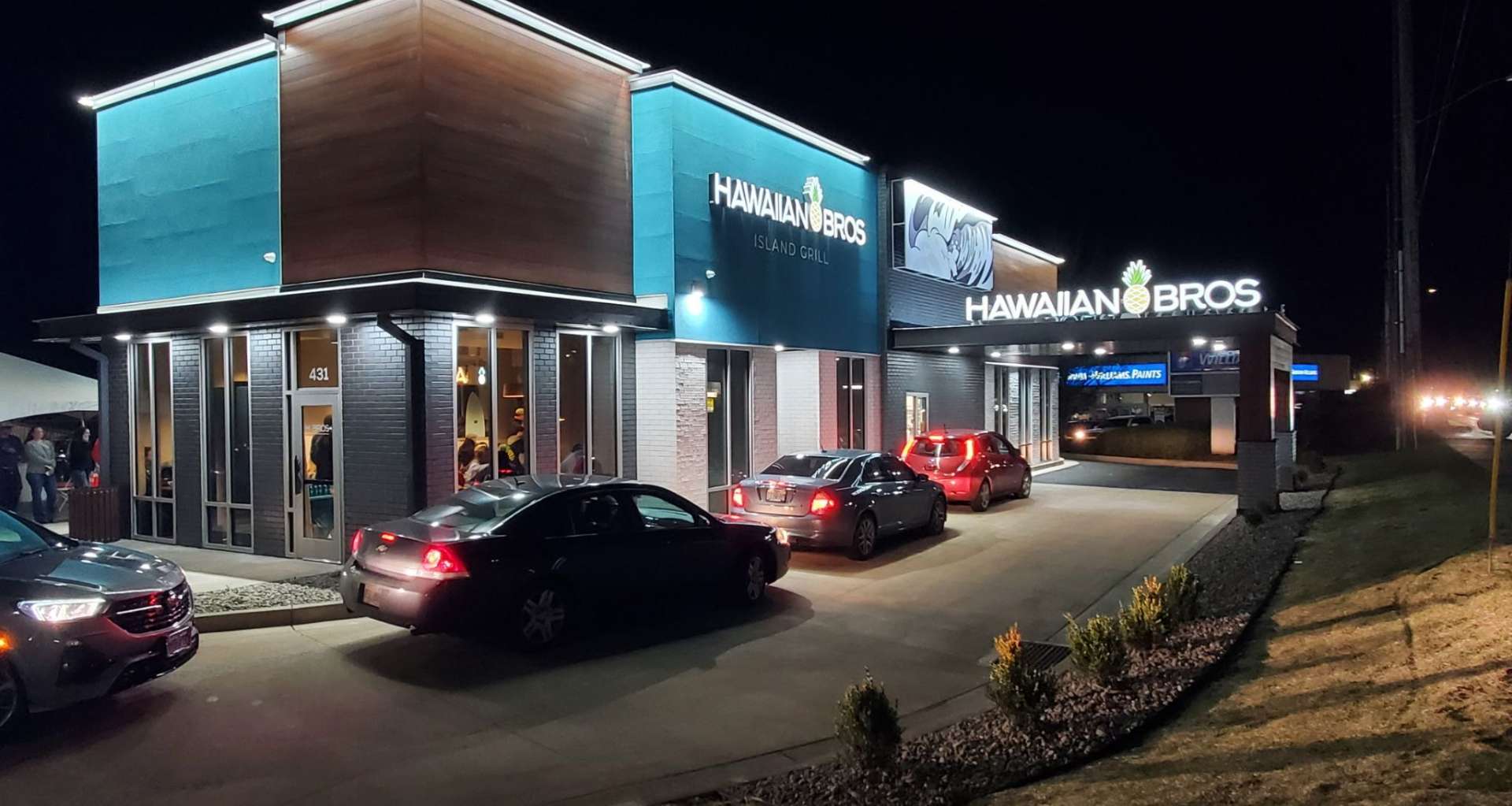
Hawaiian Bros Island Grill has signed a 52-unit Florida development agreement with Southern Rock, an operator that already runs nearly 200 McAlister’s Deli and Dave’s Hot Chicken restaurants. The scale is notable, but the more useful commercial question is whether operator infrastructure can convert a six-year development commitment into disciplined market entry across four distinct metropolitan areas.
The agreement creates a large pipeline, not 52 operating restaurants
Hawaiian Bros posted the Florida announcement on 12 October 2026. A company-supplied release published the following day by Franchising.com says Southern Rock plans 52 restaurants across Jacksonville, Gainesville, Tampa and Orlando over six years, including 24 during the first three years.
Those figures are development targets. The companies did not announce opening dates, signed leases, site addresses, construction budgets, franchise fees, financing terms or the amount of capital committed. The agreement should therefore be read as a contractual growth programme rather than an operating network already secured.
At a simple average, 52 restaurants over six years implies almost nine openings a year. The first-stage plan of 24 restaurants in three years implies eight a year. Those are arithmetic pacing indicators, not company forecasts for annual openings; actual delivery may be uneven because site approvals, construction and market sequencing rarely occur in equal increments.
Why operator qualification matters more than the headline unit count
Southern Rock is led by Max Piet and, according to the announcement, operates nearly 200 McAlister’s Deli and Dave’s Hot Chicken restaurants across 13 states. That experience matters because a 52-unit commitment requires more than access to capital. It demands a repeatable system for real estate, construction, recruitment, training, supply-chain onboarding, local marketing and field supervision.
The deal also shows what emerging franchisors increasingly seek from large development partners: existing multi-unit infrastructure and evidence that the operator can manage more than one restaurant system. A diversified operator may be able to reuse back-office capabilities and market knowledge, but adding another concept also creates execution risk. Leadership attention, development teams and local labour pipelines are not unlimited.
For brand owners, operator scale should not replace concept-specific diligence. The critical questions include whether the franchisee has a dedicated Hawaiian Bros leadership team, how capital is ring-fenced, which performance thresholds govern expansion and what happens if the opening schedule falls behind.
Florida is four market-entry programmes, not one
Jacksonville, Gainesville, Tampa and Orlando share a state regulatory environment, but they do not share identical demand patterns, real-estate economics or labour conditions. Orlando has a large tourism economy; Gainesville is shaped partly by a major university; Jacksonville covers a broad, dispersed metropolitan area; and Tampa combines dense urban districts with extensive suburban growth corridors.
That makes territory sequencing a central commercial decision. An operator can pursue density in one metropolitan area before entering the next, or open across several markets to accelerate awareness. The first approach can support field supervision, local marketing and distribution efficiency. The second can establish a wider footprint quickly but increases the burden on training, construction oversight and supply reliability.
The announcement does not disclose the sequence, site formats or territorial exclusivity. Investors should not infer that every Florida market, trade area or restaurant format has been assigned solely from the four-city description.
The operating model is designed for replication—but replication still has limits
Hawaiian Bros says its menu is intentionally simple and that restaurants operate without freezers, fryers or microwaves. A narrower operating platform can reduce equipment complexity and support training consistency, although the announcement does not disclose buildout costs or prove that every Florida site will share the same capital profile.
The company also says it has more than 80 restaurants across 14 states, with most locations franchisee-owned, and more than 350 additional restaurants under development agreements across 20 states and more than 75 markets. The 52-unit Florida agreement alone is roughly 65% of the current open-store base cited by the company. That comparison illustrates the commitment’s scale; it does not mean the Florida units will open on schedule or generate results comparable with established stores.
A large signed pipeline can strengthen supplier discussions and brand visibility, but it also raises the standard for franchise support. Site selection, onboarding, construction coordination and field operations must expand before the restaurants do. Otherwise, development agreements can grow faster than the organisation required to convert them into healthy units.
Commercial implications for franchisors and multi-unit operators
- Test development capacity by function: verify the people, systems and capital assigned to real estate, construction, recruitment, training and operations—not just total units already operated.
- Stage territory commitments: milestone-based releases can protect the brand if an operator cannot meet opening schedules or operating standards.
- Model city-level economics: one state-level agreement should still include separate assumptions for rents, labour, delivery demand, tourism exposure and cannibalisation in each market.
- Plan support before openings: franchisor field teams, supply capacity and local marketing resources should expand ahead of the unit pipeline.
- Distinguish signed units from productive units: development commitments indicate intent and contractual obligations; store openings, sales quality and unit-level returns demonstrate execution.
What investors should monitor
The most useful evidence will arrive after the announcement: the first confirmed sites, the pace of lease execution, clustering strategy, restaurant formats, opening cadence and early unit performance. It will also matter whether Southern Rock builds dedicated leadership for the brand and whether Hawaiian Bros expands its support infrastructure in step with the wider development pipeline.
This agreement is commercially meaningful because it combines a large market-entry commitment with a demonstrably experienced multi-brand operator. Its success, however, will be measured restaurant by restaurant. The headline is 52 units; the real work is converting that number into viable sites, trained teams and repeatable operating performance.
Star Brands Consulting Group supports brand owners and operating partners evaluating franchise structures, territory strategy and market-entry readiness. Learn more about our Market Entry Advisory.
Leave a Reply