
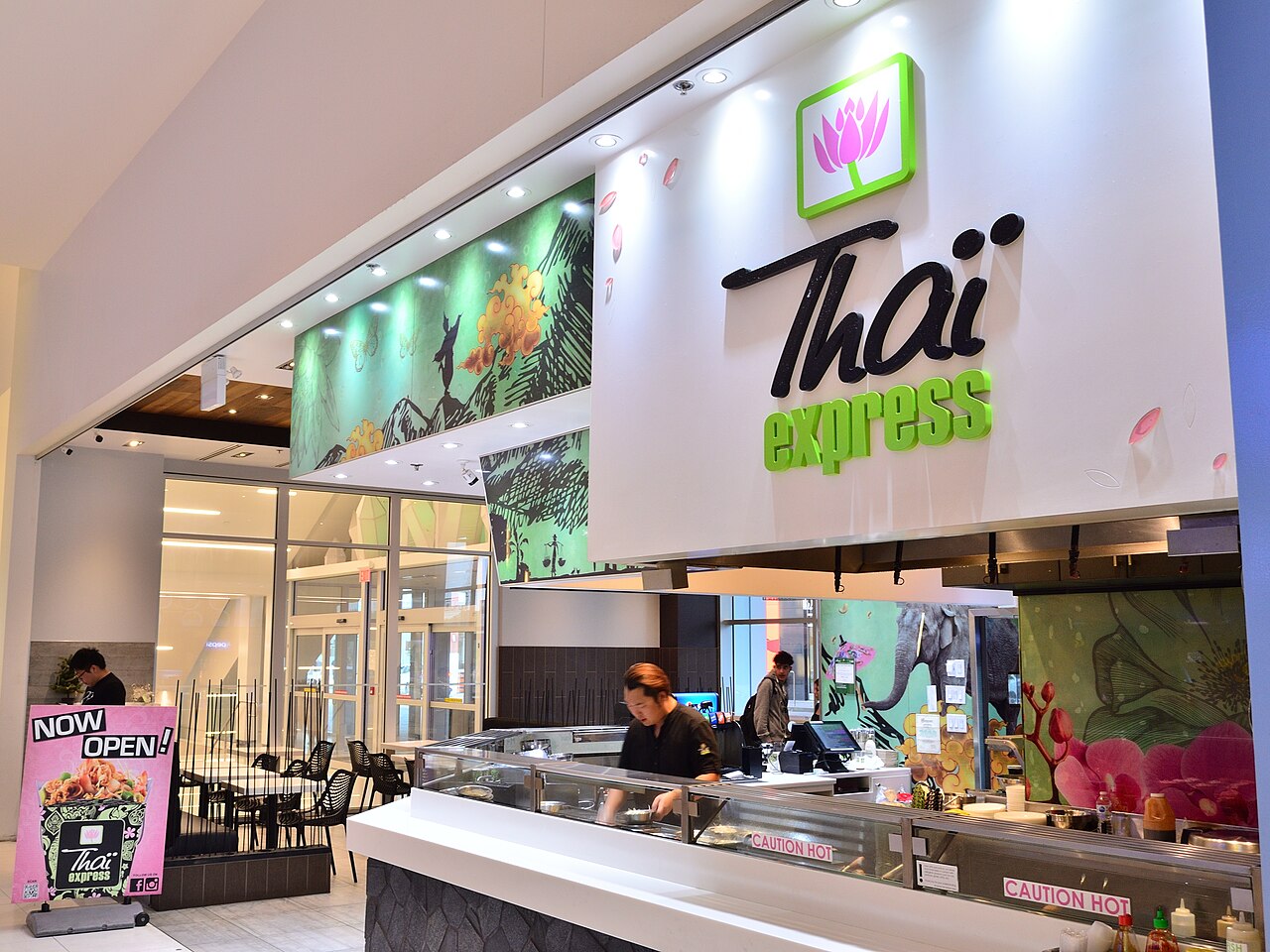

MTY Food Group has ended a strategic review that considered a sale of all or part of the company. Its chosen path is different: simplify the portfolio, return more capital to shareholders and accelerate a move back toward asset-light franchising.
The decision matters beyond MTY. It offers an unusually clear look at why a large multi-brand restaurant group may prefer royalty-led growth to direct store ownership—and what operators should examine before assuming that “asset-light” automatically means low risk.
The board chose a franchise-first reset
MTY said on 9 October 2026 that its board had concluded the strategic review launched on 17 November 2025. The review considered alternatives including a sale of all or part of the company, but the board decided that accelerating MTY’s existing strategy offered the most compelling path.
The stated programme includes portfolio optimisation, a return to asset-light franchise operations, restructuring some functions and offices, and returning capital through a higher dividend and potential share repurchases. MTY increased its quarterly dividend from C$0.37 to C$0.50 per share. A proposed normal-course issuer bid and any substantial issuer bid remain subject to approvals and market conditions.
That distinction is important. The review’s conclusion is an announced strategy, not evidence that every portfolio decision has been made or that the financial benefits are guaranteed. MTY did not identify which brands might be sold, consolidated or prioritised.
The segment economics explain the attraction
At the end of the third quarter, MTY reported 6,966 locations: 6,782 franchised or operated under operator agreements, and 184 company-owned. That means approximately 97% of the network was already outside direct corporate ownership—an arithmetic observation, not a company target.
The financial contrast was sharper. Franchise-segment revenue was C$102.4 million and normalised adjusted EBITDA was C$55.4 million, a 54% margin. The corporate segment generated C$100.7 million of revenue but only C$0.9 million of normalised adjusted EBITDA, a 1% margin. MTY attributed pressure in corporate operations partly to softer system sales, an employee-retention-credit comparison and store-exit costs.
Those figures do not prove that every corporate restaurant should be franchised: company stores can protect market presence, test formats and provide operational intelligence. They do show why the board sees capital allocation and ownership structure as central to value creation.
Asset-light does not remove network risk
MTY’s system sales were broadly flat at C$1.5 billion in the quarter, while same-store sales fell 1.9%. The network opened 72 locations and closed 146, producing a net reduction of 74. Fifty closures related to a previously announced corporate-store programme.
For investors and franchise partners, that is the key counterweight to the margin story. Moving stores off the balance sheet may reduce direct operating exposure, but the franchisor still depends on durable unit economics, healthy operators and attractive local markets. A royalty stream is only as resilient as the sales base and franchisee balance sheets beneath it.
Digital sales offered a more constructive signal. They rose 2% to C$279.2 million and represented 19.8% of system sales, despite lower organic system sales. For a multi-brand group, shared ordering, data and loyalty infrastructure can create leverage across otherwise fragmented concepts—but only if the brand portfolio is coherent enough to use it.
What operators should test before taking refranchised stores
- Store-level transfer economics: request historical sales, occupancy, labour and repair obligations for the exact locations being offered, rather than relying on system averages.
- Closure context: distinguish strategic exits from weak trade areas or structurally challenged formats. A net closure count can hide very different underlying causes.
- Brand-level support: portfolio optimisation may change marketing priorities, leadership attention and capital allocated to individual concepts.
- Technology economics: confirm required platforms, data access, delivery integrations and fees. Digital mix is useful only when incremental sales exceed platform and promotional costs.
- Territory quality: a refranchising opportunity should be evaluated with the same site, cannibalisation and development discipline as a new-market entry.
What brand owners can learn
MTY’s decision illustrates that an asset-light strategy is an operating system, not merely a financing label. It requires strong operator qualification, reliable reporting, enforceable brand standards and the capacity to intervene before underperformance becomes a closure problem.
The most useful measures to watch over the next several quarters are therefore practical: the corporate-store count, net openings and closures, franchise-segment revenue growth, collections and credit losses, same-store sales by region, and whether portfolio simplification improves support for the brands that remain.
For investors, operators and brand owners, the commercial question is not whether franchising is cheaper than owning stores. It is whether the franchisor can convert lower capital intensity into better unit economics, stronger operators and more disciplined territory development.
Primary source: MTY Food Group’s 9 October 2026 third-quarter release and strategic-review update. Financial measures described as adjusted or normalised are the company’s non-GAAP measures and should be read with its reconciliations.
Star Brands Consulting Group helps brand owners and operators evaluate franchise, licensing and market-entry structures. Explore our Market Entry Advisory.
Leave a Reply