
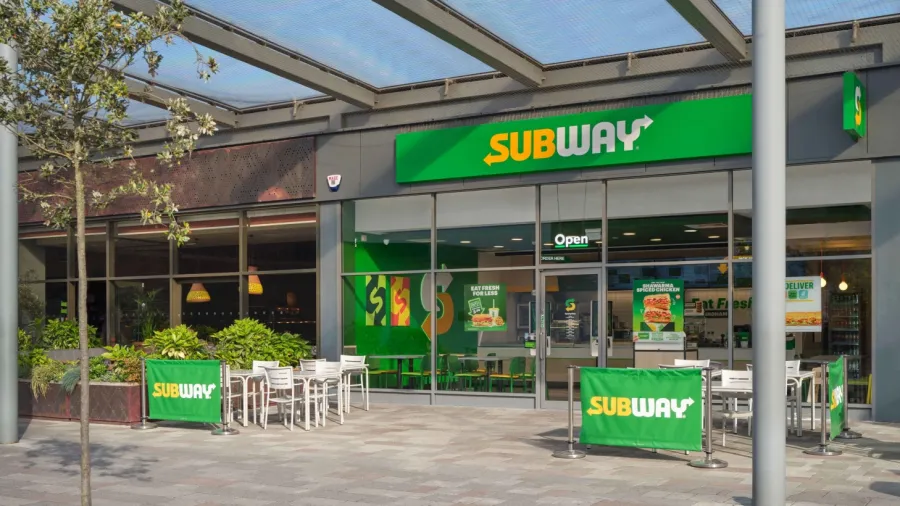
Subway’s agreement with Emerging Bites puts a practical question at the centre of international franchising: can a regional partner turn development rights into a repeatable restaurant operation?
Star Brands Consulting Group analysis | 6 October 2026
What was announced
In an announcement listed on 22 September 2026, Subway said it had signed a master franchise agreement with Emerging Bites Holdings GmbH covering 300 new restaurants over ten years across Austria, Hungary, Slovakia, Slovenia and the Czech Republic. This is a development commitment, not a report of 300 openings.
According to Subway’s announcement, the partner will develop and operate restaurants while supporting existing franchisees. Planned investment spans restaurant design, digital ordering, loyalty, supply chains, marketing and operating standards. The stated responsibilities therefore extend beyond finding sites and selling franchise licences.
A regional platform with an existing network
Emerging Bites’ own website identifies Vienna as its headquarters and reports 53 existing Subway restaurants across the five markets as of September 2026: 35 in Austria, four each in the Czech Republic and Hungary, and five each in Slovakia and Slovenia. These are company-reported network figures, not an independently audited count.
The company describes an operating model that combines direct restaurant operations, sub-franchise support, property development and supply-chain coordination. Its published ambition is to move from 53 restaurants to 353 over the partnership period. That ambition should be evaluated separately from delivered results.
The commercial issue: capacity before territory
Star Brands’ assessment: the most useful way to evaluate a multi-country agreement is to ask what the operator must build before each additional restaurant becomes manageable.
A territory can look attractive on a map while remaining difficult to execute. The first cluster needs suitable premises, trained managers, reliable deliveries and enough working capital to absorb opening delays. Expanding into another country adds another set of local relationships and operating decisions. A common brand does not remove those requirements.
For a prospective regional operator, the investment case should therefore show how central overhead is funded before the network reaches scale. A development pipeline is stronger when each proposed opening is connected to a manager, a supply route and a realistic funding plan.
Four questions for investors and operators
- Who carries the development burden? Separate restaurants financed and operated directly from locations expected to be developed by sub-franchisees. Assess the evidence behind partner recruitment rather than assuming every planned unit already has an investor.
- What makes the first cluster repeatable? Define the operating evidence needed before expanding: staffing stability, service quality, delivery reliability and a clear understanding of store-level cash requirements.
- How will existing franchisees be supported? Ask how new systems, training and operating expectations will be introduced. Network expansion and the health of existing restaurants deserve separate management attention.
- What happens when openings slip? Test the funding model against slower site approvals, construction delays and a longer sales ramp. A phased rollout should remain financially workable without relying on every opening arriving on schedule.
What brand owners can take from this
The partner-selection process should test operational depth alongside financial capacity. A credible candidate should be able to explain how it will recruit restaurant leadership, maintain standards and respond when an individual market underperforms.
Brand owners can also ask for a practical sequence of development rather than only a large headline commitment. Which market comes first? What must be proven before the next cluster launches? Which functions will be shared, and which require local teams? Clear answers make progress easier to assess after the agreement is signed.
These are evaluation questions, not disclosed terms of the Subway agreement. The cited announcement does not provide investment budgets, royalty rates, individual site allocations or a country-by-country opening calendar. This article does not establish that any particular territory or location is available.
Watch delivery, not just the announcement
The next meaningful evidence will be identifiable openings, operating progress and support for the existing network. For investors, the distinction is straightforward: a signed development agreement establishes an intended direction; completed, sustainable restaurants demonstrate execution.
For brands and operators considering international growth, the broader lesson is to build the operating plan at the same time as the territory strategy.
Planning a franchise or market-entry strategy? Explore Star Brands Consulting Group’s private advisory services for support with your own expansion planning.
Sources
- Subway: master franchise agreement with Emerging Bites, listed in its newsroom on 22 September 2026.
- Emerging Bites: operating model and September 2026 network figures.
Sources checked on 6 October 2026. Commercial interpretation is Star Brands Consulting Group’s analysis; company plans remain forward-looking.
Leave a Reply